Drain cleaning
Shared stacks and repeat backups on lower floors.
Read more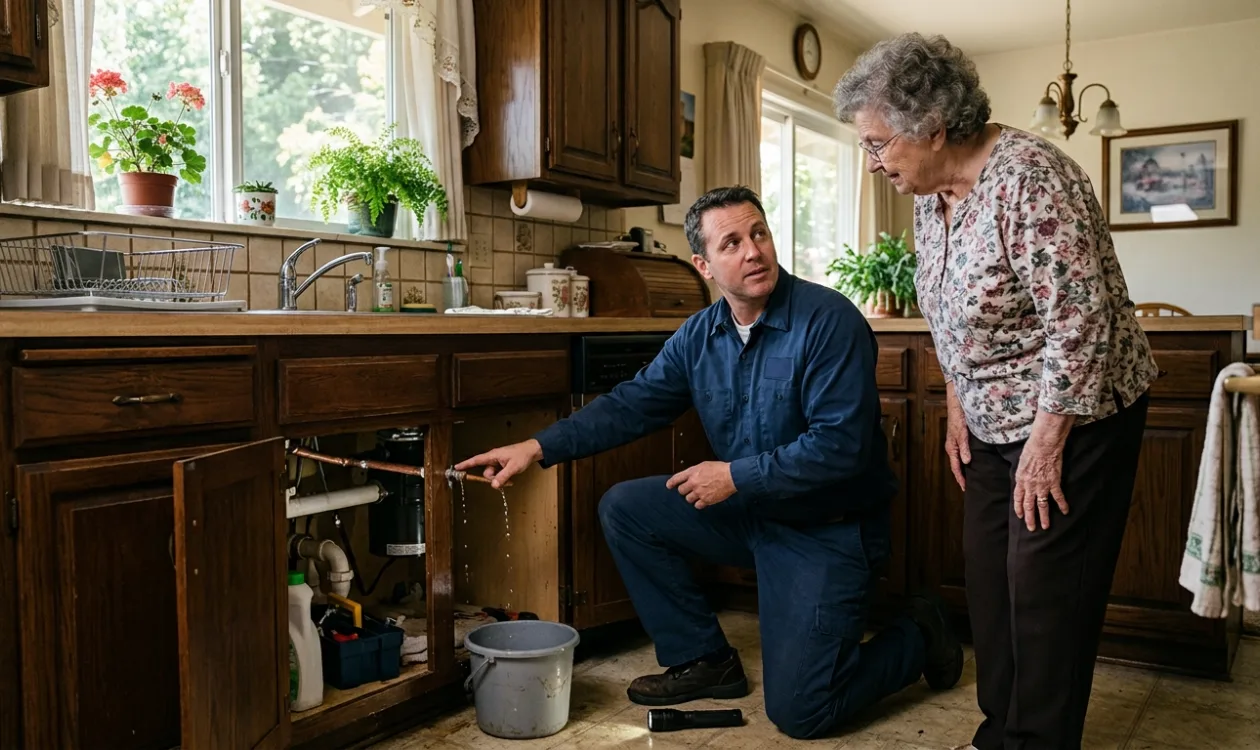
92840 · Civic Center & the surrounding blocks
Downtown is the most mixed part of the city to work in. A sixty-year-old fourplex, a 2015 townhome and a ground-floor commercial unit can sit on the same block, and each one changes who is responsible for the pipe, who authorizes the repair and how fast it has to happen.
Shared stack backing up, a unit above leaking into yours, or no hot water in a whole building.
Get a Downtown Pro DispatchedDowntown Garden Grove covers the blocks around the Civic Center, running out along Main Street, Euclid Street and Garden Grove Boulevard. Unlike the uniform tracts elsewhere in the city, this is a genuinely mixed area, and the mix is what makes the plumbing work distinct.
A large share of downtown is apartment and fourplex buildings from the sixties and seventies. These share vertical waste stacks and, in many cases, shared supply risers and a central water heater. Shared systems mean shared symptoms. When a downstairs unit reports a backup, the cause is frequently something a neighbor above put down a drain, and the fix has to be handled at building level rather than unit level.
Cast iron stacks in buildings of this era are now at the age where internal corrosion becomes a real factor. The tell is repeated backups on lower floors that clear briefly and return. A camera up the stack answers the question quickly and prevents the same cable job being paid for four times a year.
Newer attached housing brings the opposite set of issues. The plumbing is modern and generally sound, but the buildings are tight, units share walls and floors, and a small leak in one unit becomes a damage claim in two or three. Speed matters more than complexity. Locating the source quickly and shutting the right isolation valve is most of the job.
These buildings also raise the responsibility question constantly. Whether the pipe in question is inside the unit boundary or in common area determines who pays, and the association documents rather than the plumber decide that. A pro who has worked these buildings knows to establish it early rather than halfway through.
Downtown has retail, offices and food service at street level, often beneath residential above. That combination is demanding. A restaurant kitchen generates grease load that residential drainage was never sized for, and a failure at street level can affect the units above. Grease interceptor service, floor drain jetting and back-flow prevention testing are routine requirements rather than occasional extras.
Practical detail that matters more downtown than anywhere else in the city: getting a truck close to the building. Jetting and camera equipment is not carried by hand for long distances. If access is through a gate, an alley or a subterranean garage with a height limit, saying so on the phone prevents a wasted visit.
Quick facts
If you are in a condo or an apartment, find out whether the association or the landlord has a preferred process. Knowing who authorizes the work before a pro arrives is the single thing that most often decides whether a repair happens today or next week.
That answer decides who authorizes the repair, and it is worth five minutes on the phone before anyone drives out.
Multi-family specifics
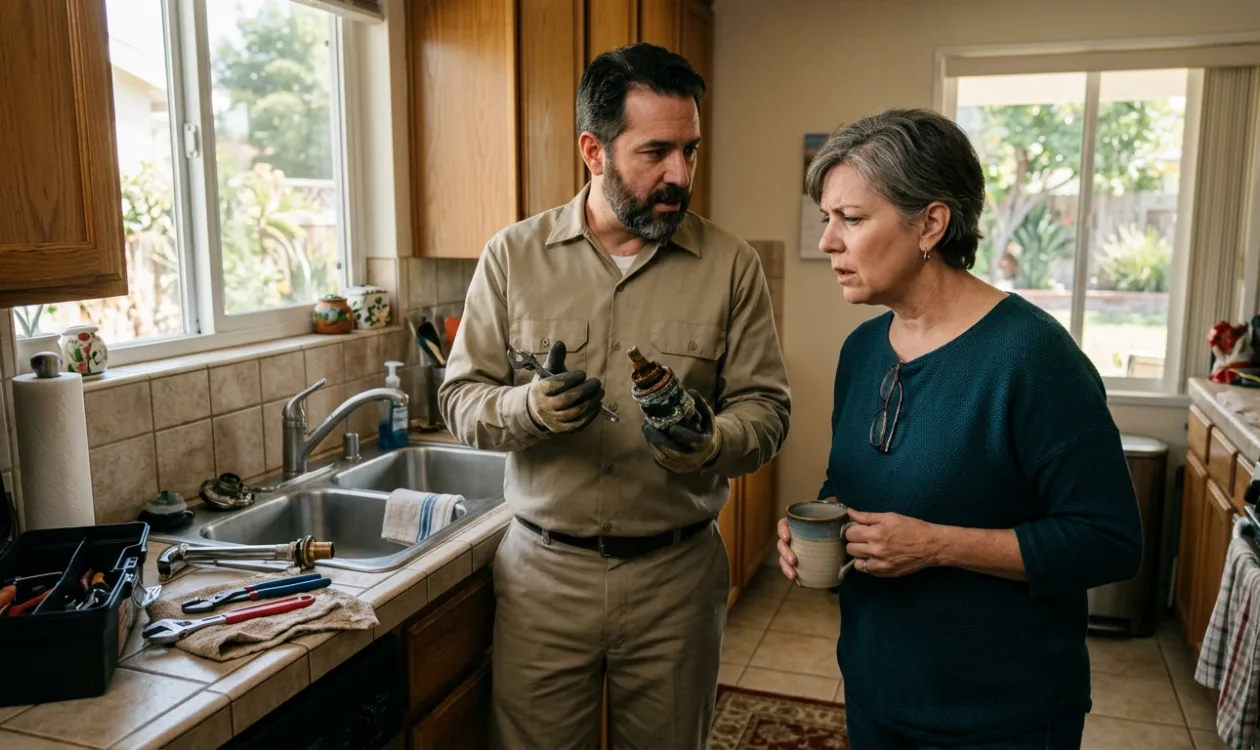
Plumbing in a shared building follows different rules from plumbing in a house, and most of the friction comes from that rather than from the pipe.
A vertical waste stack serves every unit above it. When it partially blocks, water backs into the lowest opening, which means the ground-floor bathroom takes the consequence of what happened three floors up. Treating that as a ground-floor problem leads to repeat visits. Treating it as a stack problem, with a camera and a clean from the roof vent or a proper cleanout, ends it.
Older buildings frequently have one large heater or a bank of them serving all units. When that fails, everybody is out of hot water at once, and it becomes urgent in a way a single-family failure does not. Recirculation pumps, mixing valves and expansion tanks all form part of these systems and any of them can be the actual fault when the complaint is lukewarm water.
Water appearing on a ceiling almost never originates directly above the stain. It travels along joists and follows the path of least resistance. Tracing it properly means moisture meters and access from the unit above, which needs cooperation. The faster that access is arranged, the smaller the eventual repair.
In shared buildings the paperwork is part of the job. Photographs before and after, a written description of the cause, and a clear statement of what was and was not in scope. Associations and insurers ask for it, and a repair without it can become a dispute months later.
For food service downtown, the two recurring items are grease interceptor maintenance and floor drain jetting. Both are scheduled work rather than emergency work, and both are far cheaper on a schedule than after a shutdown. Tenant improvement rough-in for a new unit is the other regular request, and it runs through the same permit and inspection process as any other change.
Most requested here
Shared stacks and repeat backups on lower floors.
Read moreGrease-loaded lines under ground-floor food service.
Read moreTracing water between units before the damage spreads.
Read moreTenant units, interceptors and improvement rough-in.
Read moreCentral systems, recirculation pumps and mixing valves.
Read moreActive leaks in a building where minutes multiply the damage.
Read moreHow a call works
Shared buildings need the responsibility question settled before the wrench comes out.
Talk to Someone About the Stack
Have the unit number, the building manager contact and any association instructions to hand.
House, condo, apartment or commercial tenancy. Who can approve the work is established on the phone.
In shared structures the visible symptom and the actual cause are often in different units. Tracing comes first.
Where water is active, isolation and containment happen immediately so the damage stops while scope is agreed.
Work completed and recorded with photographs and a written cause, which associations and insurers will ask for.
Local questions
Who pays, who authorizes, and why the leak is never directly above the stain.
Contain it first: buckets, move what you can, and photograph everything before you clean up. Then notify the building manager or association immediately, because access to the unit above is usually needed.
Call for a plumber at the same time. The source is often some distance from where the water appears, and finding it early keeps the repair small.
It depends on where the failed pipe sits relative to the unit boundary defined in the governing documents. Broadly, pipe serving only your unit tends to be yours and shared risers and stacks tend to be common area, but the documents govern.
A plumber can tell you what failed and where. Who pays is a question for the association, and having the plumber’s written description makes that conversation much shorter.
Because the ground floor is the lowest opening on a shared stack, so a partial blockage higher up discharges there first. The problem is usually not in your unit at all.
The fix is at stack level. Repeated cabling of the ground-floor fixture treats the symptom and will keep recurring.
A central heater failure affecting multiple units is treated as urgent and dispatched same-day.
Note that lukewarm water across a building is often a mixing valve or a recirculation pump rather than the heater itself, which is usually a faster and cheaper repair.
Yes. Multi-family and rental work downtown is a regular part of the dispatch, including scheduled maintenance rather than only emergencies.
Documentation and clear written scope are provided as standard, because managers need them.
That depends on volume and on the size of the unit, but a regular schedule is always cheaper than reactive service. Many operators find quarterly appropriate and adjust from there.
A blocked interceptor eventually becomes a closed kitchen, which costs more than any service interval.
Say so when you call and it will be checked. Height restrictions matter because jetting and camera equipment is truck-mounted.
Most downtown buildings are workable, but knowing in advance means the right vehicle is sent the first time.
The pipe itself is usually fine. What changes is the consequence of a small failure, because units share floors and walls and water spreads quickly into a neighbor’s property.
Speed of response matters more in these buildings than the technical difficulty of the repair.
Next door
Older homes on the blocks immediately north.
Commercial frontage running east and west.
Residential streets a short distance west.
Across the eastern city boundary.
92840 · homes, buildings and tenant units
Getting the source located and the water stopped quickly is what keeps one repair from becoming three claims.