Leak detection
The non-destructive work that has to happen before any concrete is touched.
Read more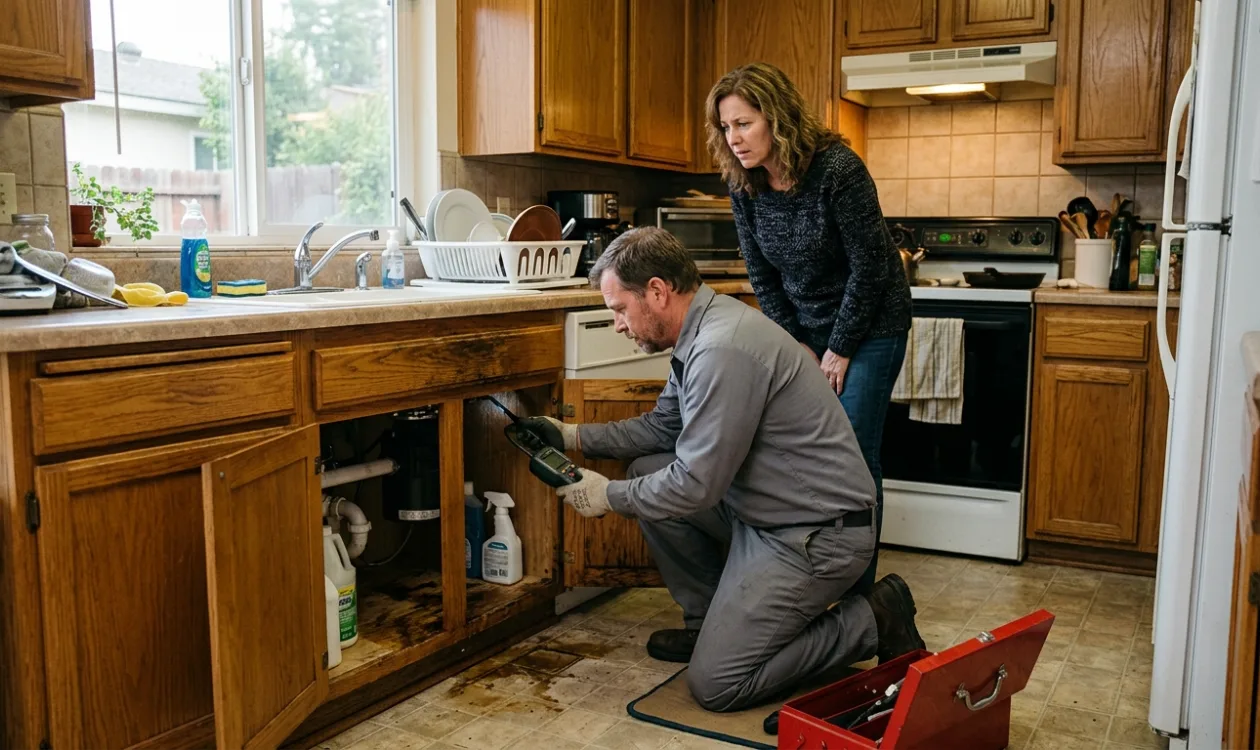
The signature failure of the 1960s tracts
A warm patch on the floor, a meter that turns with every tap closed, a hot water bill that climbed for no reason. Under a slab-on-grade house those three symptoms point one direction, and the real decision is reroute versus jackhammer.
Describe the warm spot and the meter reading: that is usually enough to size the job.
Call (657) 354-1942 About a Slab LeakMost of Garden Grove was built as slab-on-grade housing during the postwar tract boom of the 1950s and 60s. In that construction, copper supply lines run through or beneath the concrete floor slab rather than in a crawl space. It is a perfectly sound way to build. The catch is that after sixty-plus years, copper embedded in concrete and surrounded by soil chemistry begins to fail, and when it does, there is no valve, no access panel and nothing visible.
The leak is usually small at first, which is precisely why it costs money. Water escaping under a slab has three places to go: into the soil beneath the concrete, along the underside of the slab toward the perimeter, or up through a crack or expansion joint into your flooring.
Nobody sees a slab leak. They notice something adjacent to it. The most reliable early sign in a hot-water leak is a patch of floor that is warm to bare feet, often in a hallway or near a bathroom, in a house with no radiant heating. On the cold-water side, the equivalent tell is a water bill that has climbed while nothing about the household changed.
Then there is the meter test, which is the single most useful thing you can do before calling. Shut every fixture, appliance, irrigation zone and ice maker. Find the meter at the sidewalk and watch the low-flow indicator. If it creeps, water is leaving the system. Do it again with the water heater's cold inlet closed: if the movement stops, the leak is on the hot side, which is by far the more common failure.
Other signals show up later. A faint hiss or rushing sound in a quiet house with everything off. Hairline cracks appearing in tile grout or vinyl lifting at a seam. A musty smell along a baseboard. Carpet that is damp in one spot for no reason. In severe long-running cases the soil beneath the slab washes out enough to create settlement, which shows up as doors that stop closing squarely.
This is the part that separates a good visit from an expensive one. Concrete should be opened once, in the right place. Location work uses layered methods: acoustic listening equipment amplifies the sound of pressurized water escaping and, with the system isolated section by section, narrows it to a few feet; thermal imaging maps the heat plume of a hot-water leak through the floor; pressure isolation confirms which line is losing water by taking segments out of service one at a time; and where necessary a tracer gas is introduced into the drained line and detected at the surface.
Only after the location is confirmed and marked does anyone discuss breaking anything. If a plumber offers to start cutting without doing this work, that is your signal to get someone else on the phone.
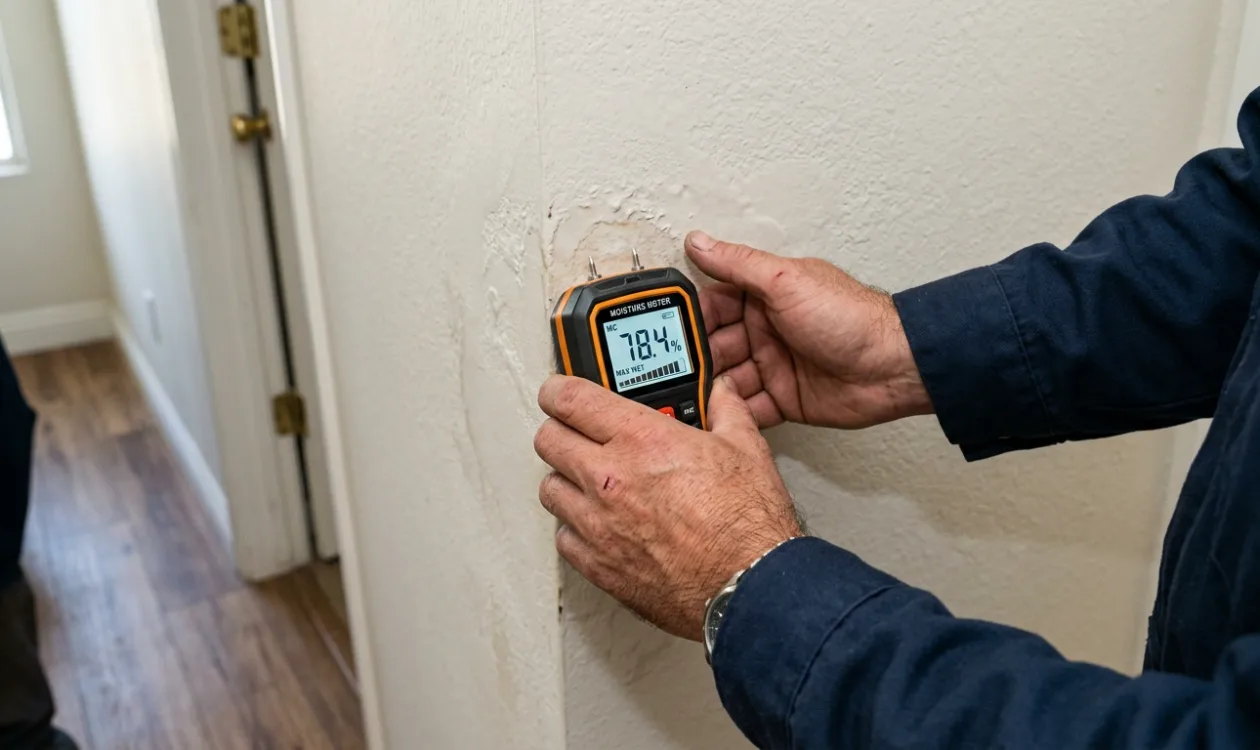
Everything off, watch the low-flow dial. Then repeat with the water heater cold inlet closed. Whether the dial stops tells the plumber immediately whether it is hot or cold side.
A hot-water slab leak runs continuously and is heating soil, not your house. It is also the version that wastes the most water and money.
Tell us what is on the floor. Original tile set in mortar, engineered wood, polished concrete and carpet all change the access conversation and the cost.
Rerouting supply lines and slab work generally require a City of Garden Grove permit and inspection. That should be quoted in, not added later.
Nobody should break concrete on a guess. Location comes before demolition.
How the repair runs
Four stages, and you make the decision at stage three with real numbers in front of you.
Compare Reroute vs TrenchTwo legitimate approaches, very different disruption. Ask which suits your floor plan.
Meter isolation and pressure testing establish that water is escaping the supply system and whether it is hot or cold side.
Acoustic, thermal and where needed tracer-gas methods mark the spot on the floor, along with an estimated depth.
Reroute the run overhead, or open the slab at the marked point. You get both prices and the disruption profile of each.
New line pressure-tested before closing. Concrete patched to grade where trenched; drywall access left clean where rerouted.
The real decision
Once the leak is pinpointed there are two defensible ways forward, and the right answer depends on your house rather than on the plumber's preference.
Opening the slab means cutting the flooring, saw-cutting and breaking a trench through the concrete to the pipe, repairing or replacing the failed section, pressure-testing, then backfilling and patching the concrete. It keeps the original pipe routing intact and it is often the cheaper option when the leak sits close to the perimeter, in a garage, or under flooring you were planning to replace anyway. The downsides are real: dust and noise, a day or more of a room being unusable, and flooring that will not match seamlessly afterwards. It also does nothing about the rest of that sixty-year-old run, which sits under the same concrete.
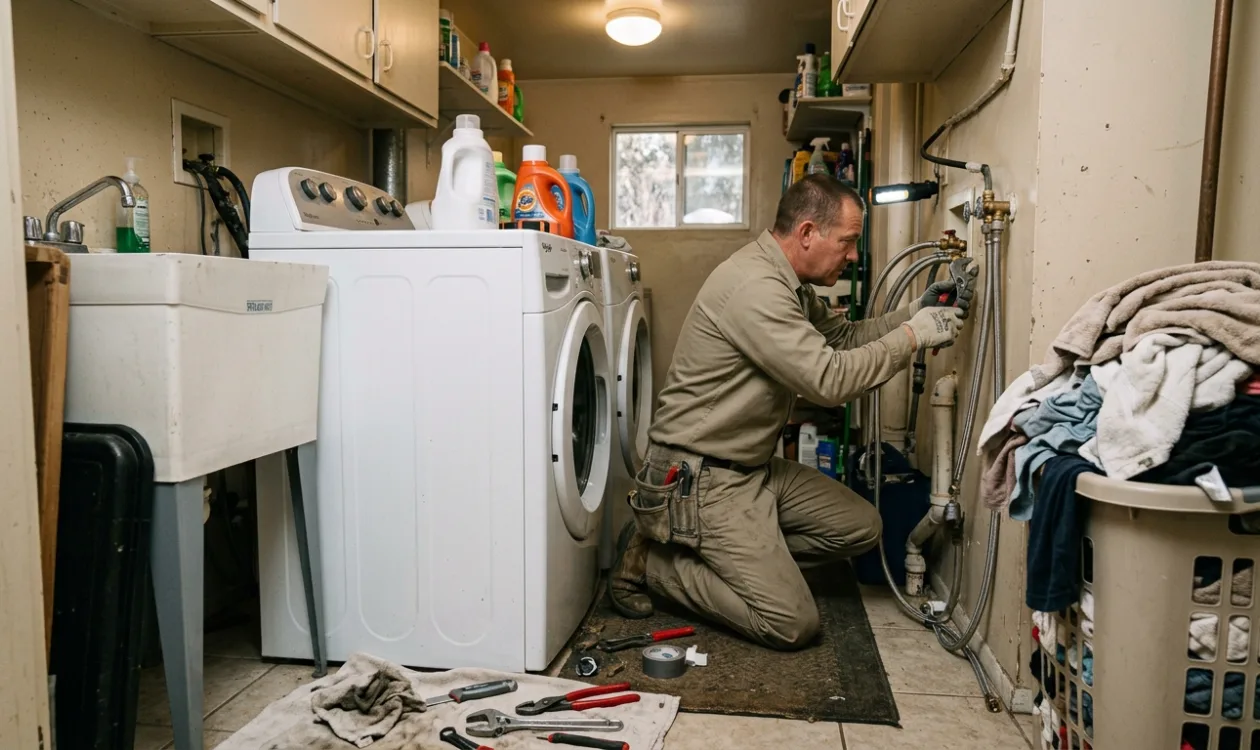
Rerouting abandons the failed under-slab run entirely. New pipe (copper or PEX) is routed up a wall, through the attic and back down to the fixture group it serves, and the old line is capped at both ends. There is no concrete work at all. Access holes get cut in drywall instead, which patch far more cleanly than a slab. The trade-off is that the new run is longer, it passes through an attic that gets genuinely hot in an Orange County summer so insulation matters, and on a house with a complex layout the routing can be awkward.
In practice, rerouting wins more often in this city's tract housing than homeowners expect, particularly on hot-water leaks in the middle of a floor plan, where trenching would mean cutting through a living area. Where the leak is a single failure just inside the perimeter of a garage slab, trenching is frequently the sensible, cheaper answer.
Sometimes location work turns up a third situation: multiple leaks on the same run, or a system where the copper is uniformly thin. Repairing one point in a system that is failing everywhere is throwing money at a symptom. That is the moment the conversation shifts to a partial or whole-home repipe, which abandons the under-slab distribution altogether and puts the entire supply system somewhere accessible. It is a bigger project and a bigger number, but it ends the recurring calls.
Four things, in roughly this order: how much demolition and restoration the access requires; the flooring material over the leak; how far the pipe run travels if you reroute; and whether the failure is single or systemic. Depth of the pipe within the slab and the presence of post-tension cables (uncommon in this era of local housing but critical where present, since they must not be cut) also factor in.
Slab leak questions
These come up on nearly every call about a warm floor.
Because of when and how the city was built. Most of Garden Grove went up as slab-on-grade tract housing in the 1950s and 60s, with copper supply lines running under the concrete. Six decades of soil contact, water chemistry and pressure cycling eventually produce pinhole failures. It is not a defect in your house specifically; it is the expected end of service life for that construction detail.
Usually, yes. Close the cold water inlet valve on top of your water heater with all fixtures off, then watch the meter. If the dial stops moving, the leak is on the hot side. If it keeps moving, it is on the cold. Hot-side leaks are considerably more common and are the ones that produce a warm spot on the floor.
That is a question for your insurer, not for us, and coverage varies widely between policies. What we can tell you is that adjusters generally want documentation: the location method used, photographs of the failed pipe, and a written description of the cause and the repair. A plumber can provide all of that.
A trenched repair on an accessible leak is often completed in a day, with concrete patching and flooring restoration following. A reroute typically takes one to two days depending on how many fixtures the run serves and how the attic access works out. Multi-leak situations and full repipes run longer, and you should get a schedule with the quote.
No, and often it is better. A rerouted line is accessible, replaceable and no longer sitting in concrete and soil. The compromises are a longer run and a pipe that passes through the attic, which is why insulation on hot-water runs matters here. Many local homes have had reroutes in place for decades without issue.
Yes. Location is entirely non-destructive: acoustic listening, thermal imaging, pressure isolation and sometimes tracer gas. Demolition only begins once the spot is marked and you have approved an approach. Anyone proposing to open concrete to go looking has skipped a step.
It gets isolated and capped at both ends and simply stays where it is, dry and out of service. There is no benefit to removing it and no way to do so without the demolition you just avoided.
Possibly, on the cold side. A cold-water slab leak produces no temperature signature, so the meter test is the diagnostic that matters. Rule out irrigation first, since a stuck valve or a broken lateral in the yard produces exactly the same bill increase and is much cheaper to fix.
A long-running leak can wash fines out of the soil supporting the slab, and that can lead to localized settlement. It is not an overnight risk, but it is the reason a known leak should not be left running for months. Doors that have started to bind and new cracks in a floor are worth mentioning when you call.
Significantly. Post-tension slabs contain tensioned steel cables that must never be cut, so trenching requires scanning to locate them and sometimes rules out cutting in the needed spot entirely. That construction is uncommon in this era of Garden Grove tract housing but does appear in newer developments. Where it exists, rerouting is usually the recommended route.
Cost drivers
Flooring type, pipe depth and how far the run travels are the three levers.
What Does This Cost?Related work
The non-destructive work that has to happen before any concrete is touched.
Read moreWhen location work shows the copper is thin everywhere, not just at one point.
Read moreA wet parkway and low pressure point at the service line, not under the house.
Read moreWhere we do this work
Cohesive 1960s ranch tracts on larger lots.
Post-war tracts through the south and east of the city.
Residential streets flanking the boulevard.
Neighboring city with the same slab-era housing.
Garden Grove & northwest Orange County
A hot-water slab leak wastes water continuously and can undermine soil beneath the slab.
Floor Feels Warm?