Sewer camera inspection
The survey that should happen before high-pressure water goes into old pipe.
Read more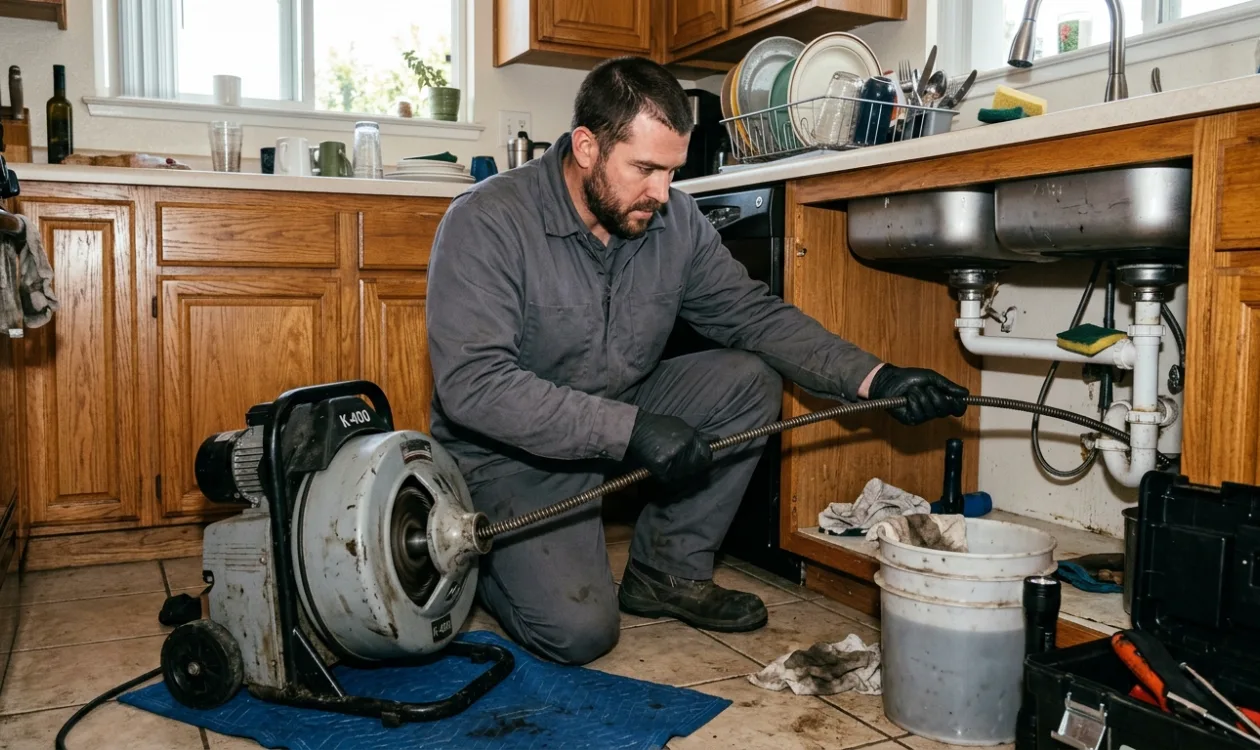
When cabling only buys a season
A cable bores a hole through the blockage. A jetter takes the pipe back to its actual diameter. If your line has been cleared twice already this year, this is the difference.
Been cleared more than once this year? Say so, it changes the recommendation entirely.
Call (657) 354-1942 About JettingHydro jetting sends water down a drain line at high pressure through a nozzle that directs most of that force backwards against the pipe wall. The reverse thrust pulls the hose up the line while the jets strip the interior surface and flush everything they remove downstream. The result is a pipe restored to close to its original bore, rather than a pipe with a channel punched through the material inside it.
The distinction matters most on the things cabling handles badly.
Grease does not exist as a lump. It coats, cools and hardens as a layer that thickens over months until the effective diameter of a four-inch line is two inches. A cable passes straight through it and restores flow for a while, because the channel it opens is enough, until it is not. Jetting emulsifies and removes the layer itself. In the commercial kitchens along the city's restaurant corridors this is the entire maintenance strategy.
Roots enter at a joint or crack and grow into a fibrous mass in the flow. A cutting head on a cable shears that mass off flush with the pipe wall, and it regrows from the same entry point. A jetter with a root-cutting nozzle removes far more of the intrusion and flushes the debris out, and it also cleans the pipe wall so a camera can actually see the condition of the joint the roots came through. That last part is what turns a repeat problem into a decision.
Old cast-iron drains build up internal tuberculation, a rough, mineralized crust that both narrows the pipe and catches everything passing. Jetting can remove a remarkable amount of it and restore genuine capacity to a line the owner assumed was finished. The caveat is important: the same scale is sometimes the only thing holding a badly corroded pipe together, and stripping it can expose or open a failure. That is why a camera survey comes first on old cast iron.
Bellied sections of pipe collect sediment that a cable cannot lift. Jetting flushes it. It does not fix the belly (that is a pipe-geometry problem needing excavation or lining), but it does buy time and it makes the camera footage clear enough to plan the repair.
An honest plumber will refuse to jet in some situations. Pipe that a camera shows to be cracked, offset at a joint, crushed or heavily deteriorated can be made worse by high-pressure water, you can wash soil into the line or open a marginal defect into a genuine failure. Orangeburg and severely degraded clay are candidates for that. In those cases the correct sequence is camera, then repair or lining, then jetting later if it is still needed.
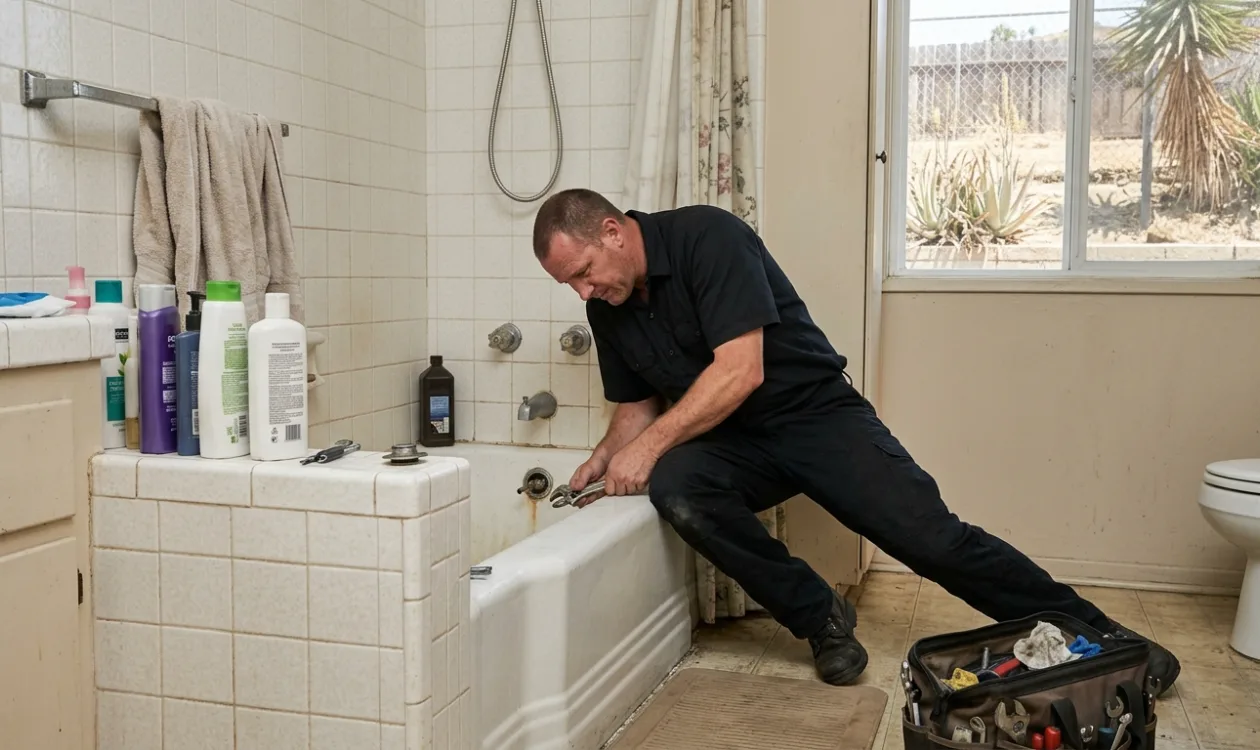
On cast iron and clay in the older parts of the city, jetting without looking is a gamble. The survey costs a fraction of what a washed-out line costs.
A toy in a toilet trap or a hair mat in a lavatory arm is a cable job. Jetting is for coatings, roots and accumulations.
Root-prone laterals and commercial grease lines both do better on a schedule than on emergency response. Twelve to twenty-four months is a common range.
A proper ground-level cleanout makes jetting straightforward. If your house does not have one, installing one is often worth doing while the crew is there.
It is the right tool for grease, scale and roots. It is the wrong tool for a failing pipe.
How a jetting visit runs
The survey at the start and the verification at the end are what make the middle worth paying for.
Schedule a Camera and JetLook first, jet second. That order protects old pipe from an expensive mistake.
The line is inspected before any pressure goes into it, to confirm the pipe can take jetting and to see what is actually in there.
Work set up at the cleanout with containment for what comes back out. On commercial jobs that includes protecting the interceptor.
Nozzle selected for the material (grease, roots or scale), and the line worked in stages rather than one pass.
A second pass with the camera shows the restored bore and any defects the buildup was hiding, plus a maintenance interval if the line needs one.
Local ground truth
Jetting earns its keep in three specific local situations.
Root-choked laterals under mature street trees. This is the most common residential case across the whole city. The trees went in when the tracts did, the laterals are clay or cast iron with jointed connections, and roots have been finding those joints for decades. Homeowners in this situation have usually been cabling the line once or twice a year for years. Jetting plus a camera changes the conversation from "clear it again" to "here is the joint, here is what lining it costs, here is what a maintenance interval costs instead."
Grease lines along the commercial corridors. The dense restaurant and retail stretches, Garden Grove Boulevard through the Koreatown corridor between Beach and Brookhurst, the Little Saigon area on the south side, the dining blocks around Historic Main Street and SteelCraft, generate genuine commercial drain loads. Kitchen lines and grease interceptors there need scheduled jetting, not reactive clearing, because a blocked line during service hours costs a business far more than the maintenance would have.
Scaled cast iron in the older core. Early-1900s craftsman housing near Main Street and the Village Green, and the earliest postwar tracts, drain through cast iron that has been building tuberculation for sixty to a hundred years. Where the pipe wall is still sound, jetting can restore most of the lost diameter and postpone a replacement by years. Where it is not, the camera says so before anything is attempted, and that is precisely the situation where jetting blind would turn a working drain into an excavation.
Two practical local notes. Larger lots in West Garden Grove mean longer laterals, so jetting runs take longer and the hose reach matters. And in condo and townhouse buildings, jetting a shared stack affects other units, coordinating access with the association and notifying neighbors is part of doing it properly rather than an afterthought.
Jetting questions
The most important one is whether your pipe should be jetted at all.
In sound pipe, no, the pressure is high but it is directed at scouring the wall, and municipal drain lines are jetted routinely. The risk is in pipe that is already failing: cracked, offset, crushed, or severely deteriorated clay and Orangeburg. That is exactly why a camera survey should come before the jetter on any older line, and why a plumber who refuses to jet after looking is doing you a favor.
A cable makes a hole through the obstruction and restores flow. A jetter removes the material from the pipe wall and flushes it away, restoring the diameter. If your line blocks repeatedly, that difference is the whole reason to consider jetting.
It removes the intrusion far more thoroughly than a cable, but it does not close the opening the roots came in through. As long as that joint or crack exists, roots will find it again, they are following water. Lasting resolution means either repairing or lining the defect, or accepting a maintenance interval and jetting on a schedule.
It depends on how aggressive the intrusion is and how much of the pipe is compromised. Twelve to twenty-four months is the usual range, and the camera footage from the first visit is what sets it. Lines that need it more often than annually are usually better candidates for repair than for maintenance.
Often yes, especially in a home where the kitchen branch has been slow for years. Household kitchen lines accumulate the same grease layer that commercial ones do, just more slowly. On a short branch with easy access it can be very effective.
Access to a cleanout, and water. Jetting uses a substantial volume, typically drawn from a hose bib or carried on the truck. If your home has no accessible cleanout, that gets discussed before the visit, since installing one may be part of the work.
Everything removed from the line has to come out somewhere, so containment at the access point is part of the setup. A properly run job leaves the area clean. Interior jetting through a fixture is messier than working from an exterior cleanout, which is another reason a ground-level cleanout is worth having.
No. A belly is a geometry problem: the pipe has lost its fall and now holds standing water, which collects sediment. Jetting flushes the sediment and restores flow temporarily, and it makes the camera picture clear enough to plan a real repair, but the low spot is still there. Correcting it means excavating and re-laying that section, or lining it where appropriate.
A residential lateral is usually a two to four hour visit including the camera work before and after. Longer laterals on larger lots take more time, and commercial grease lines vary widely with the length of the run and how heavily loaded it is.
Yes, and it is common maintenance in shared-wall buildings, but it needs coordination. Jetting a stack affects the units connected to it, so access, timing and notification go through the association or property manager. Documentation of what was found and removed is worth requesting, since it usually informs who is responsible for what.
Cost drivers
Line length, access and how much material is in there set the cost.
Get a Jetting PriceRelated work
The survey that should happen before high-pressure water goes into old pipe.
Read moreFor one-off blockages where a cable is the right and cheaper tool.
Read moreWhen the camera shows the pipe itself has failed and scouring will not help.
Read moreWhere we do this work
Boulevard commercial corridor with heavy kitchen loads.
Mixed retail and residential along the boulevard.
Long laterals on larger cul-de-sac lots.
Neighboring city with similar tract-era drainage.
Garden Grove & northwest Orange County
Full-diameter scouring plus a maintenance interval is what actually ends the cycle.
Tired of Clearing the Same Line?