Slab leak repair
The most common finding under a Garden Grove slab, and the two ways to fix it.
Read more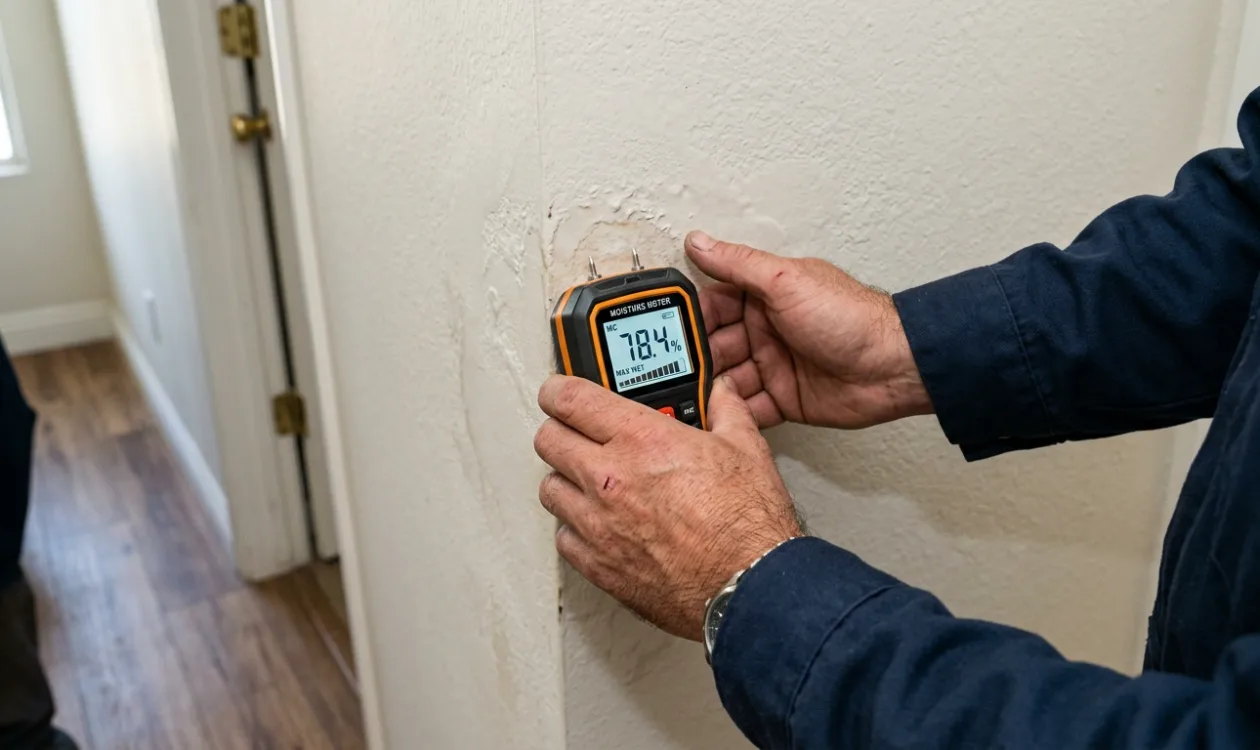
Find it before you cut it
You know water is going somewhere, the meter says so. Where it is going is a different question, and answering it with instruments instead of a demolition saw is the difference between one access hole and four.
Bring your meter reading to the call: it shortens the diagnosis considerably.
Call for a Leak Search: (657) 354-1942Leak detection is diagnosis, not repair. The goal is a mark on a wall, a floor or a patch of yard, accurate enough that whoever opens it up finds the failure immediately. Everything else (acoustic equipment, thermal cameras, pressure gauges, tracer gas) exists to get to that mark without breaking anything first.
It matters because access is where the money goes. Opening a wall, a ceiling, a tiled shower or a concrete slab is expensive and it damages finishes you then have to restore. Doing it once, in the right place, is a completely different budget from doing it three times while working toward the sound of running water.
The clearest is a moving meter with the house shut down. Beyond that: a water bill that stepped up and stayed there; a warm spot on a slab floor; a musty smell at a baseboard with no visible source; paint bubbling or a stain spreading slowly on a ceiling; the faint hiss of water in a silent house; a section of lawn that stays green and soft while everything around it dries out; efflorescence or dampness on a garage wall.
Any one of those is worth a look. Two of them together usually means the leak has been running for a while.
Meter isolation comes first because it is free and it answers the biggest question: is water escaping the pressurized supply system at all? Everything off, watch the low-flow dial. Then the same test with the water heater's cold inlet closed, which separates hot-side from cold-side losses. Then, where a shut-off exists, isolating irrigation, a stuck valve or a cracked lateral in the yard imitates a house leak perfectly and is far cheaper to fix.
Acoustic listening is the workhorse. Pressurized water escaping through a small opening generates sound that travels along the pipe and through the surrounding material. Ground microphones and contact probes, with electronic filtering, let a technician follow that signal and narrow it to a small area. It works well on metallic pipe and under slabs, less well on plastic and in noisy environments, which is why detection appointments sometimes happen early in the morning.
Thermal imaging maps temperature differences across a surface. A hot-water leak under a slab produces a plume that a camera reads clearly through tile or wood. It also reveals wet areas in walls and ceilings, since evaporating moisture cools the surface. It shows the extent of the damage as well as the source, which is what determines how much drywall comes out.
Pressure isolation takes the system apart logically instead of physically. Segments are valved off and pressurized individually, and the one that will not hold is the one with the failure. On a house with reasonable valving this can localize a leak to a single branch in minutes.
Tracer gas is the last resort and the most definitive. The line is drained and charged with an inert, non-toxic gas mixture, which migrates out through the failure and up through soil, concrete or drywall, where a sensitive detector picks it up at the surface. It works where acoustic methods fail, plastic pipe, very small leaks, deep runs.
A competent visit uses several of these in sequence, and each one narrows what the next has to search.
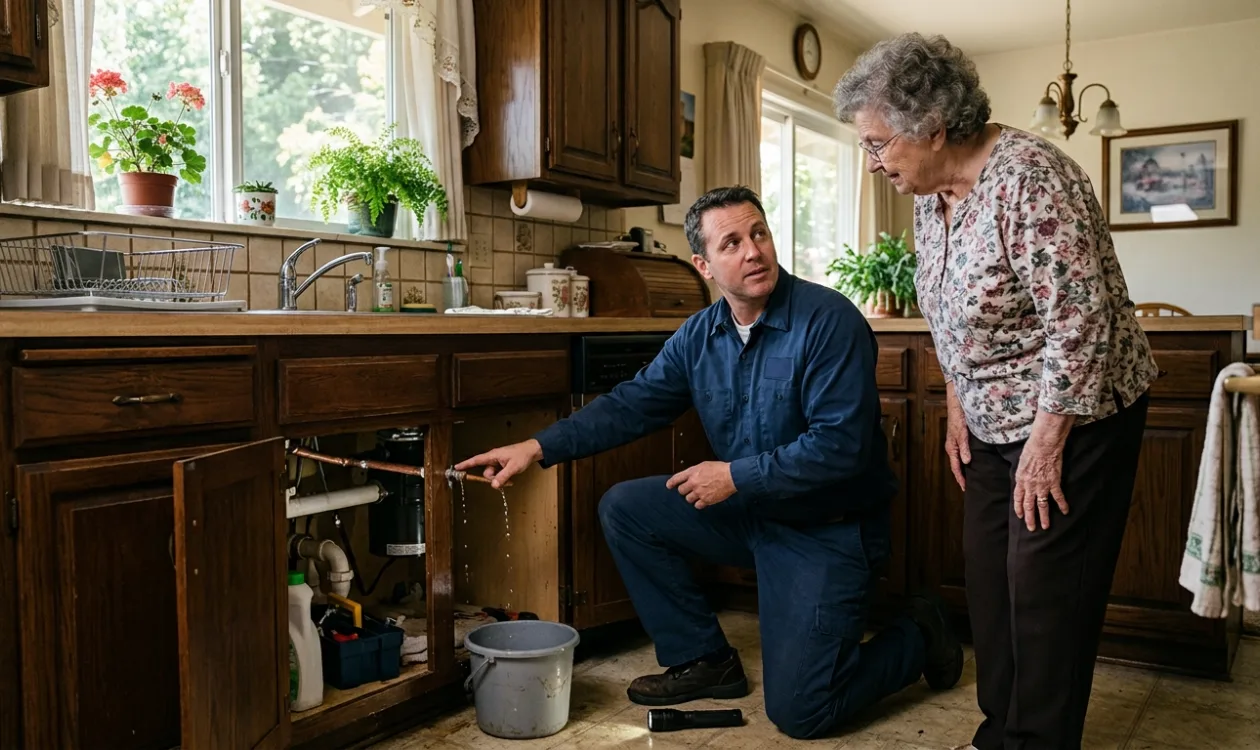
Run the meter test and write down what you saw. Then check irrigation separately if you can isolate it. That single step rules out a whole category.
Acoustic work needs a quiet house. Turning off HVAC, pool equipment and anything with a compressor during the appointment genuinely improves accuracy.
You can book location work on its own and take the findings wherever you like. It is quoted separately from any repair.
Ask for the marked location, the method used and photographs. That documentation is what an insurer or an HOA will want to see.
Guessing costs more than testing. Every time.
How a detection visit runs
Nothing gets opened during detection. You end the visit with information and a decision to make.
Get an Instrument DiagnosisAcoustic, thermal and pressure isolation, layered until the spot is certain.
Meter isolation with and without the water heater valved off, plus irrigation ruled out where it can be isolated.
Pressure isolation by branch, then acoustic sweeping to bring a whole-house problem down to a few square feet.
Thermal imaging or tracer gas confirms what the acoustics suggested, so the mark is certain rather than probable.
Location marked on the surface, extent of wetting mapped, photographs and method notes handed over with the repair options.
Local ground truth
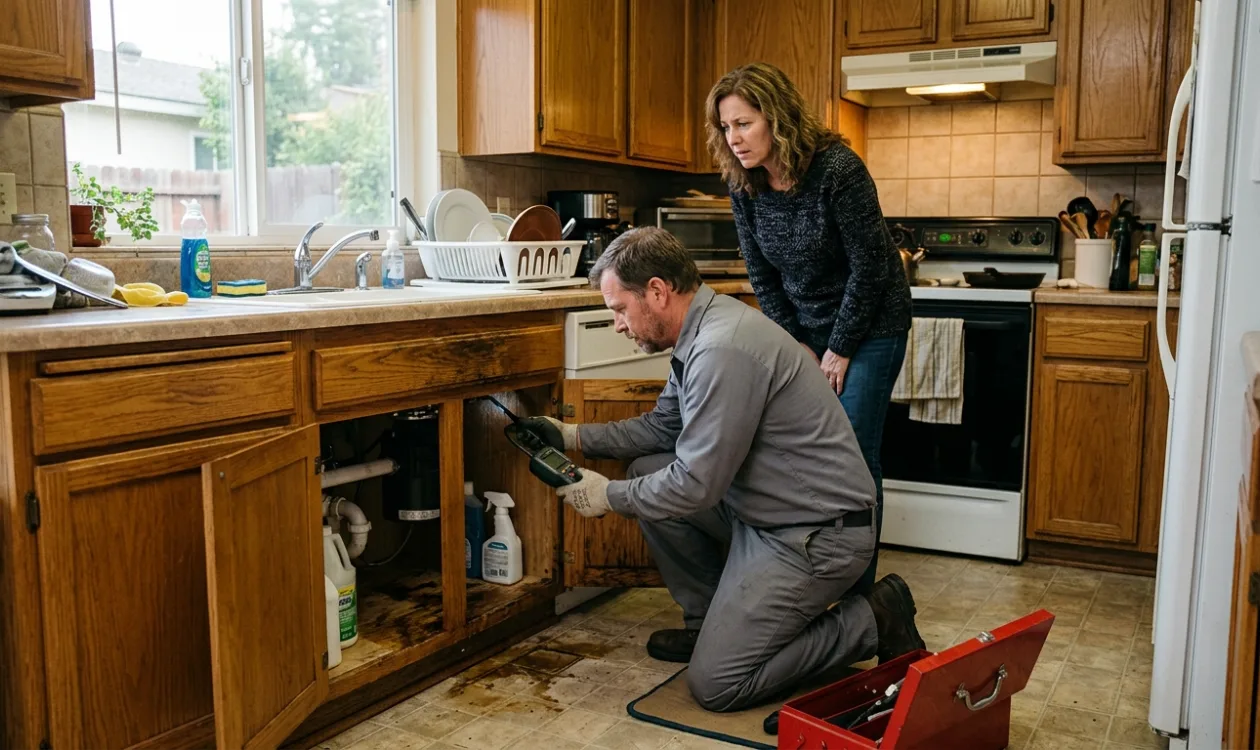
Where the leak turns out to be depends heavily on which Garden Grove you live in.
In the 1950s and 60s slab tracts that make up most of the city, the recurring find is a hot-water line under the concrete. Acoustics plus thermal imaging handle those well, and the outcome is usually a reroute-versus-trench decision rather than a mystery.
In the older craftsman housing near Historic Main Street and the Village Green, leaks tend to be in walls and crawl spaces at galvanized joints. Metal pipe transmits acoustic signal beautifully, so those are often located quickly, the harder part is that the pipe either side of the failure is frequently too corroded to repair, which changes the conversation.
In condo and townhouse buildings, detection has an extra dimension: whose plumbing is it? Water appearing on your ceiling may originate in the unit above, in a shared vertical stack, or in a common supply line the association maintains. Thermal imaging and careful pressure isolation can establish which, and documenting that clearly is often what determines who pays. It is worth booking detection before any conversation with a property manager, not after.
Out in West Garden Grove's larger-lot streets, the yard is a genuine suspect. Long irrigation runs and long service laterals mean a soft green patch of lawn is frequently the whole answer, and ruling the yard in or out early saves an unnecessary search inside the house.
Across all of it, two local factors matter. Hard imported water leaves scale that seizes shut-off valves, so the isolation testing that should be simple sometimes requires replacing a stop first. And mature street trees over old laterals mean that a homeowner reporting "a leak" occasionally turns out to have a drain problem rather than a supply problem, which is a camera inspection, not an acoustic search.
Detection questions
Detection is cheap relative to demolition. That is the entire argument for it.
On metallic pipe under a slab, a good acoustic and thermal survey routinely gets within a foot or two, which is close enough that a single access opening finds the failure. Plastic pipe, very small leaks and deep runs are harder, which is when tracer gas gets used. No honest technician will promise a pinpoint on every job, but the goal is always one opening rather than several.
No. The whole point is that location happens before demolition. Equipment sits on surfaces, sensors touch pipe at accessible points, and where tracer gas is used it goes into a drained line and dissipates harmlessly. Any opening happens afterwards, with your approval, once the spot is marked.
Yes. Detection is quoted as its own service and the findings are yours, location, method, photographs. Plenty of people book it to settle a dispute with an HOA, to support an insurance claim, or before buying a house.
Isolate it. If your irrigation has its own shut-off, close it and repeat the meter test. If the dial stops, the problem is in the yard system and not the house. This is worth checking first because irrigation leaks are common, produce identical bill increases, and are usually much cheaper to repair.
Different problem, different tool. Drains are not pressurized, so acoustic detection has nothing to listen to. Those get diagnosed with a camera inspection and, where needed, a smoke or dye test. If the symptoms point that way (sewage smell, staining that only appears when a fixture runs), the visit shifts to camera work.
Most take one to three hours. A house with good isolating valves and a clear symptom is quick; a house with seized stops, several possible sources or a leak that only runs intermittently takes longer. Intermittent leaks are the hardest, and occasionally need a second visit timed to when the symptom appears.
Not precisely, but the meter can give you a rate. Timing the low-flow indicator over a set period gives a gallons-per-hour figure, and that multiplied out is often the number that ends the debate about whether to fix it now.
Yes, generally. Access to the meter, the water heater, under-sink stops and any affected rooms is required, and the technician will want to ask you when the symptoms appear and what changed. Detection is a conversation as much as a survey.
Usually. Thermal imaging shows the wet area behind the surface, moisture meters confirm it, and acoustic listening locates the escape point on the pipe. What imaging cannot do is tell you the exact condition of the pipe, so the access opening is still what confirms the diagnosis, just a much smaller and better-placed one.
Often, yes, and that is a common reason for booking it in the local condo and townhouse stock. Pressure isolation can establish which unit is losing water, and thermal imaging can trace the wetted path. The result is documentation both parties and the association can look at, which tends to be more productive than two opinions.
Detection pricing
A defined diagnostic fee, quoted before the visit, separate from any repair.
Ask What Detection CostsRelated work
The most common finding under a Garden Grove slab, and the two ways to fix it.
Read moreWhen the located failure is a wall or attic line that has let go entirely.
Read moreFor drain-side mysteries, where acoustics have nothing to listen to.
Read moreWhere we do this work
Older cottages around the civic core.
Mixed housing off Chapman Avenue.
Boulevard corridor between Beach and Brookhurst.
Neighboring city with a wide span of housing ages.
Garden Grove & northwest Orange County
A leak you cannot see is still on your bill every hour of every day.
Meter Still Turning?