Whole-home repiping
Retiring galvanized supply that has closed up from the inside.
Read more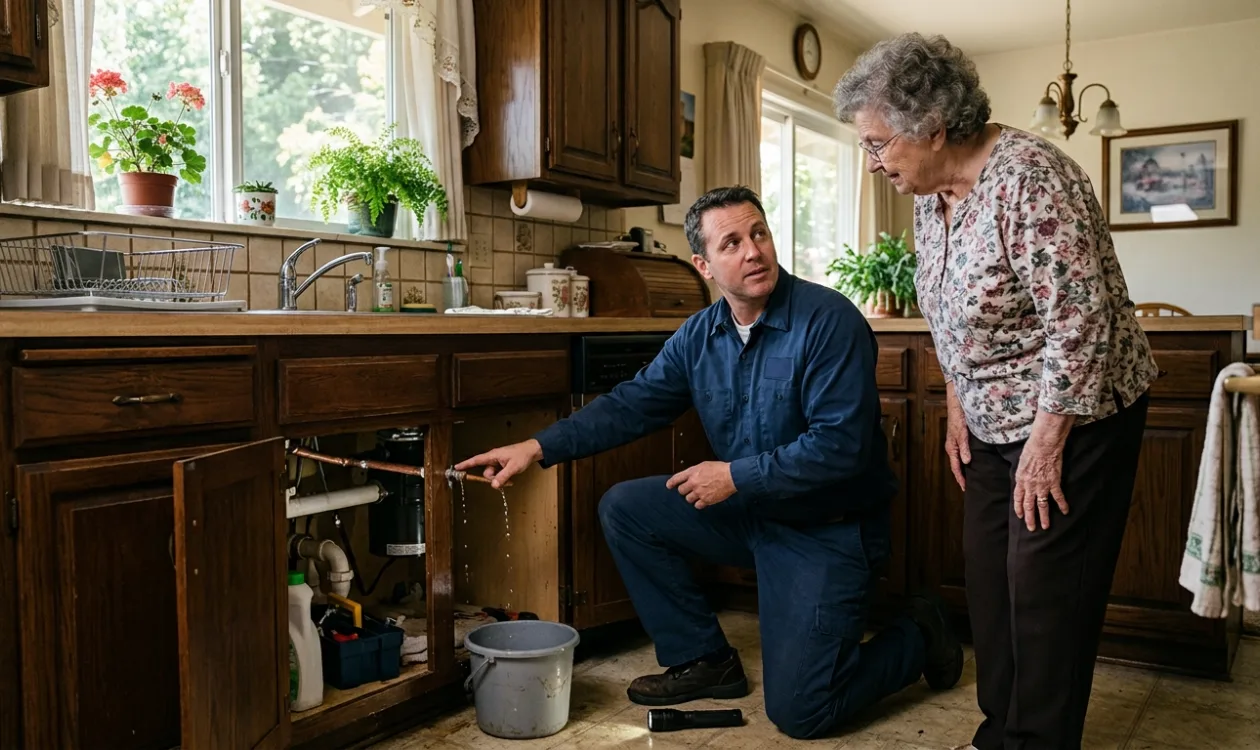
92840 · Main Street & the blocks around it
This is the oldest plumbing in the city. Galvanized steel supply that has been closing up since before most of us were born, cast iron drains on their last decade, and raised foundations that at least give a plumber somewhere to work. The problems here are different, and so are the answers.
Brown water on first draw, showers that dribble, or a drain that is slow everywhere at once.
Get a Main Street Area Pro OutThe blocks around Main Street hold the oldest surviving housing in Garden Grove. Bungalows and small farmhouses from the twenties and thirties, wartime and immediate post-war cottages, and a scattering of larger homes on deeper lots. Many have been renovated once or twice; a good number still have significant runs of original plumbing in the walls and under the floor.
Two materials define the work here. Galvanized steel for supply and cast iron for drainage. Both were excellent choices in their day and both have a finite life that has now been reached or passed.
Galvanized steel is steel with a zinc coating. The zinc protects the steel until it is consumed, and then the steel starts to rust from the inside outward. Rust occupies more volume than the metal it replaces, so the internal diameter shrinks year by year. A half-inch line can end up with the effective bore of a drinking straw.
Homeowners rarely notice this happening because it is gradual. What they notice is the end state: a shower that loses pressure when someone flushes, two fixtures that cannot run at once, hot water that takes an age to arrive, and brown water on first draw after the house has been quiet. Replacing a fixture or a cartridge does nothing for any of that, because the fixture was never the problem.
There is a second, worse symptom. Where galvanized pipe was joined to copper during a partial upgrade without a dielectric fitting, the two metals set up a galvanic cell and the joint corrodes aggressively. Partial repipes done cheaply in the eighties and nineties are a recurring find in this district.
Cast iron drain pipe rusts from the inside as well, but the failure looks different. The bottom of a horizontal run corrodes fastest because that is where water and solids sit. Over decades the invert thins, scales and eventually perforates, and long before that the roughened surface starts catching everything that passes.
The result is a house that is slow everywhere rather than in one fixture. A cable machine will restore flow for a while, but the pipe is the problem. A camera inspection is the honest starting point, because it distinguishes a pipe that is rough but sound from one that has holes in the bottom or has bellied where the ground settled beneath it.
Where the slab tracts on the west side hide their plumbing in concrete, most homes here sit on a raised foundation with a crawlspace. That is a genuine advantage. Supply lines are accessible, drains are visible, a leak can be found by looking rather than by listening, and a repipe can often be done from below with far less drywall damage than the same job in a slab house.
The crawlspace brings its own issues. Long-standing slow leaks create damp, damp attracts rot and pests, and older crawlspaces sometimes contain a patchwork of repairs from several eras. A pro who goes under the house and comes back with photographs is worth more than one who quotes from the doorway.
Quick facts
Run the cold tap in a bathroom that has not been used overnight. If the first ten seconds come out rusty or brown and then clear, that is corrosion shedding off the inside of galvanized pipe rather than anything wrong with the water supply.
No amount of fixture replacement fixes a supply line that has closed up internally.
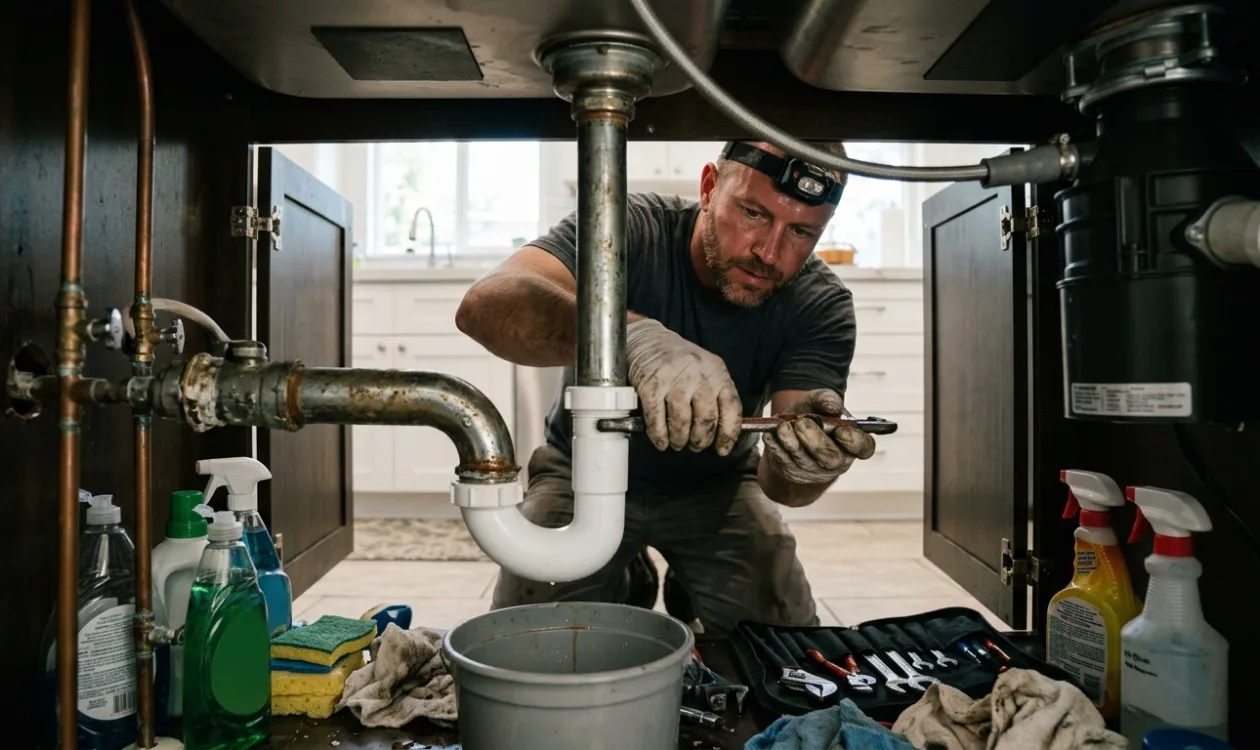
Working on older houses
Older houses reward planning. The single biggest saving available in this district is sequencing: doing plumbing work at the same time as anything else that opens walls or floors, rather than six months afterwards.
If a bathroom remodel is on the horizon and the supply lines are galvanized, that is the moment to replace them. The walls are open, the flooring is up, and the incremental cost of running new pipe is a fraction of what it costs as a standalone job later. The same logic applies to kitchen remodels and to any project that involves lifting floorboards.
Copper and PEX are both used, and both are legitimate. Copper is rigid, long-established and easy to inspect. PEX is flexible, tolerates freeze better, is faster to install through an existing structure and needs fewer joints, which in an old house with awkward runs is a real advantage. What matters more than the choice is the workmanship: proper support, proper transitions, and no dissimilar metal contact left unaddressed.
Repipes, sewer replacement, water heater changes and gas line work in Garden Grove generally need a permit and an inspection. On an older house that process occasionally surfaces something unexpected, such as a section of work from a previous decade that was never permitted. That is uncomfortable but better found now than during a sale.
The mature street trees that make these blocks pleasant are hard on clay sewer laterals. Roots enter at the mortared joints, and the resulting blockage returns as reliably as the season. Trenchless lining is often viable here and avoids tearing up a mature front garden or an established driveway, which is frequently the deciding factor.
Older homes put water heaters in closets, service porches and lean-to additions rather than tidy garage alcoves. Those locations bring combustion air, venting and pan drainage questions that a modern garage install does not. Expect a replacement here to involve more than swapping a tank for a tank.
Most requested here
Retiring galvanized supply that has closed up from the inside.
Read moreCast iron and clay lines at the end of a long service life.
Read moreLining a lateral without opening a mature front garden.
Read moreSlow-everywhere drainage that points at the pipe rather than a clog.
Read moreTelling a rough pipe apart from a bellied or perforated one.
Read moreCloset and service porch installs with venting done correctly.
Read moreHow a call works
On pre-war homes the diagnosis is usually about the system, not the fixture, so the visit starts wider.
If you know the house was partially repiped at some point, mention it. That detail changes what a pro looks for first.
What is in the walls decides the whole approach, so the first questions are about vintage and any previous work.
Supply runs are looked at directly from below where access allows, and flow is checked at more than one fixture.
Slow drainage across the whole house gets a camera rather than a cable, because the answer decides the scope.
Spot repair, partial replacement or full repipe, with the reasoning and the numbers laid out first.
Local questions
Galvanized pipe, cast iron drains and how to plan work on a house this age.
That is almost always corrosion shedding from the inside of galvanized steel supply pipe, released while the water sat still overnight.
It is a reliable indicator that the supply piping is near the end of its life. It is not a fault with the municipal water.
A single failed section can be cut out and replaced, but it rarely solves the problem, because the restriction is spread through the whole system rather than concentrated at the failure.
Replacing a length of pipe in a house that is otherwise fully galvanized generally moves the weak point rather than removing it.
Both work. PEX is flexible, needs fewer joints and is easier to route through an existing structure with minimum wall damage, which is a real advantage in a house of this age.
Copper is rigid, familiar and simple to inspect. Ask the pro which they propose and why, and judge the answer on the reasoning rather than the material.
Less disruptive than the same job in a slab house. Much of the run can be done from underneath, so wall openings are limited to drops at fixtures.
Expect a few days of work and some patching, with water shut off for parts of each day rather than continuously.
A single slow fixture is usually a local blockage. Slow drainage everywhere points further downstream, to the main house drain or the lateral.
In cast iron that often means internal corrosion and scale rather than a clog, which is why a camera is the sensible next step rather than another cabling.
Frequently, yes. Roots seek water and find it at the mortared joints of clay pipe. Once inside they form a mat that catches everything passing through.
A camera confirms it. If the pipe is otherwise sound, jetting and a maintenance schedule can hold it. If joints have offset or the pipe has broken, lining or replacement is the answer.
Yes, a repipe in Garden Grove normally requires a permit and inspection. So do sewer replacement, water heater replacement and gas line work.
The inspection protects you. It is the independent check that the work meets code, which matters most on the jobs you cannot see once the walls close.
Before, or at the same time. Once new tile, cabinetry and drywall are in, the cost of getting to the pipes multiplies.
If the supply lines are original galvanized and a remodel is planned, replacing them as part of that project is by a wide margin the cheapest time to do it.
Next door
The Civic Center blocks immediately alongside.
Mature trees and the sewer work that follows them.
Commercial frontage a few blocks south.
Comparable housing stock across the eastern boundary.
92840 · the oldest pipe in the city
Galvanized supply, cast iron drains and a crawlspace full of previous decisions. None of that is unusual here.