Commercial plumbing
Fit-out rough-in, compliance and multi-tenant systems.
Read more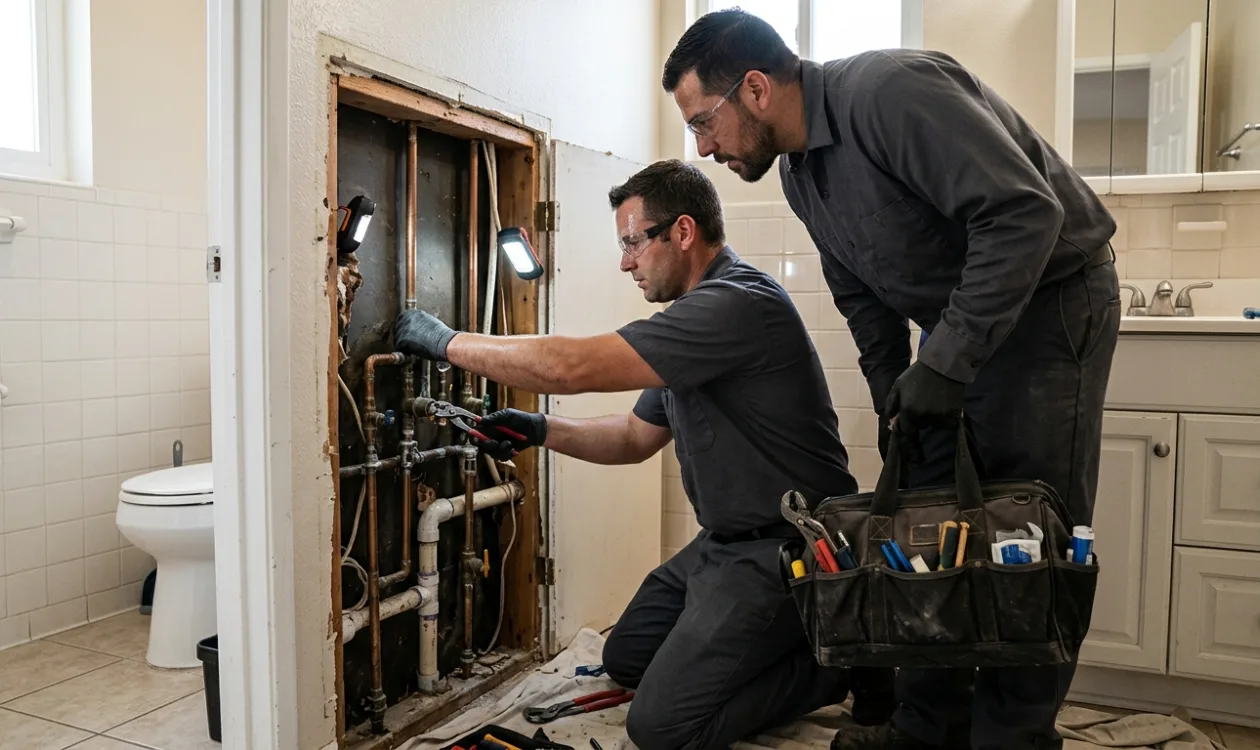
92840 & 92843 · commercial frontage
Garden Grove Boulevard is the commercial spine of the city, and the buildings along it have been re-let and re-fitted more times than anyone has counted. Every conversion added pipe to a system that was never redesigned, and that history is what a plumber is really working on here.
Tenant fit-out rough-in, an interceptor overdue, or a back-flow test that has come round again.
Get a Corridor Commercial Pro OutGarden Grove Boulevard carries the bulk of the city’s commercial frontage: retail parades, standalone units, offices, small industrial and a steady population of restaurants. The buildings are mostly from the sixties and seventies and almost all of them have changed use repeatedly.
Each tenant improvement adds what that tenant needs. A sink here, a floor drain there, a branch run across a ceiling to reach a new position. Nobody removes what the previous tenant put in, because removal costs money and disturbing existing pipe risks problems. Over five decades this produces drainage systems with abandoned branches, long horizontal runs at marginal fall, and fittings stacked in ways that a clean-sheet design would never produce.
The practical consequence is that diagnosing a corridor building takes longer than diagnosing a house, and that a camera is almost always the sensible first move. Working from an assumption about where the pipe goes is how a half-day job becomes a two-day one.
Commercial premises with certain fixtures, irrigation systems, or any connection that could contaminate the potable supply require back-flow prevention devices, and those devices require periodic testing by a state-approved backflow tester. It is a compliance item with a deadline rather than a maintenance item with a judgement call, and missing it has consequences beyond the plumbing.
Restaurants along the corridor face the same grease management requirements as those on the other commercial districts: adequately sized interceptors, regular pumping, records, and drainage that is jetted rather than cabled. Enforcement is real, and an interceptor that is not being serviced becomes a regulatory problem as well as a blockage.
Older commercial units frequently have gas piping sized for a use two or three tenants ago. Installing modern cooking equipment or heating plant without confirming supply capacity produces appliances that never quite perform, and the fault is misattributed to the equipment. Sizing, pressure testing and permitted installation are the answer, and they are worth doing before the equipment arrives rather than after.
Corridor businesses trade long hours and cannot easily close. Out-of-hours scheduling is normal and should be planned into any non-emergency job. It is cheaper than lost trade, and it is easier to do good work in an empty unit.
Quick facts
A camera survey of the branch drain and the building lateral, plus a check of gas capacity against the equipment you intend to install, costs a fraction of what discovering the problem after fit-out does.
A camera at the start of a corridor job is not an extra. It is what keeps the estimate honest.
Corridor projects
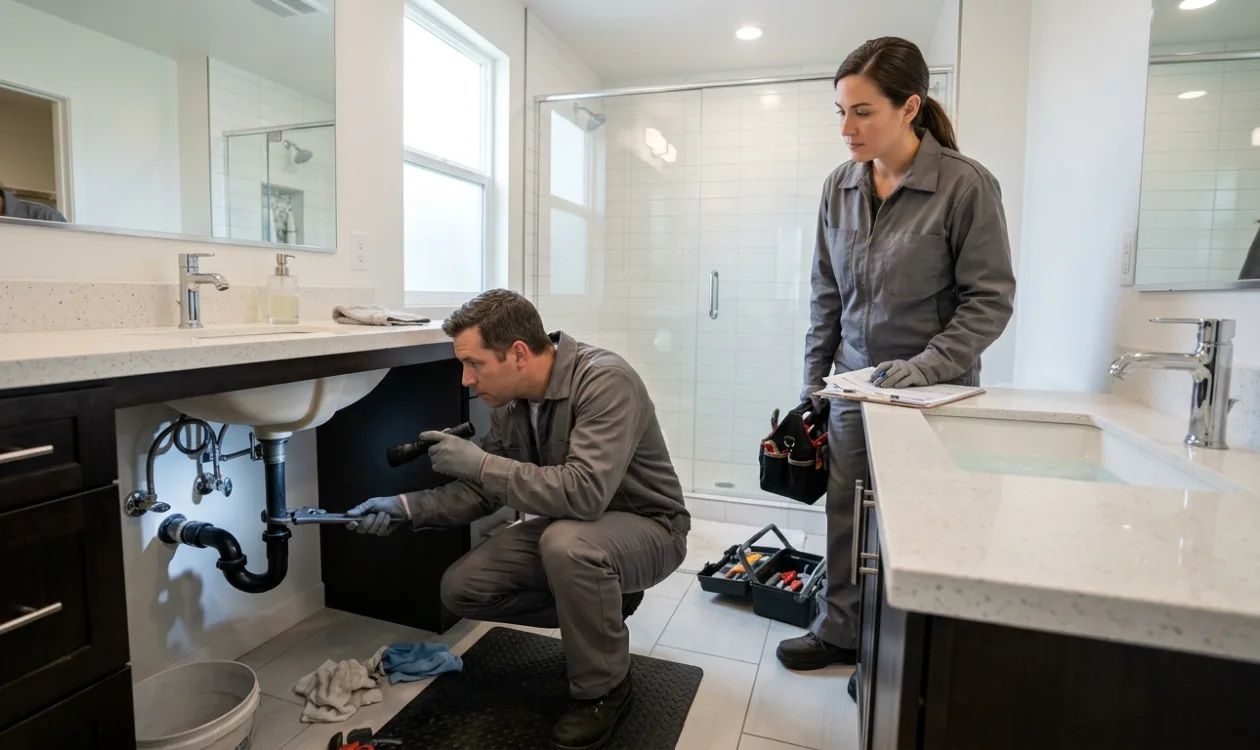
Work along the boulevard divides fairly cleanly into three categories, and each has a different rhythm.
New tenancies need drainage, supply, gas and sometimes venting in positions the previous use did not require. This is permitted and inspected work, scheduled alongside the rest of the build, and the plumbing usually sits on the critical path because walls and floors cannot close until it passes inspection. Getting it started early rather than late is the single biggest schedule saving available.
Back-flow testing, interceptor pumping and drain maintenance are calendar items. Businesses that treat them as such rarely have emergencies. Businesses that treat them as optional eventually have both an emergency and a compliance problem at the same time.
Blocked drains, failed water heaters, leaking supply lines and toilet failures in customer-facing premises are urgent because they close the unit or the restroom. Response time is the whole service here, and being able to describe the building and its access on the phone is what makes a fast response possible.
Multi-tenant buildings on the corridor share laterals, and frequently share water supply and metering arrangements. Establishing who is responsible for which element is a lease question, but the plumber’s findings are the evidence it gets resolved on. Written, photographed and specific is what to ask for.
The corridor is not exclusively commercial. Homes and apartment buildings back onto much of it, and those get the same residential service as the rest of the city. Being immediately behind commercial frontage occasionally means shared drainage arrangements that are worth understanding before a problem arises.
Most requested here
Fit-out rough-in, compliance and multi-tenant systems.
Read moreScheduled maintenance on food service drainage.
Read moreCapacity checks, sizing and permitted installation.
Read moreMapping drainage that has been altered repeatedly.
Read moreRestrooms, floor drains and branch lines in trading units.
Read moreFailures that close a unit or a restroom.
Read moreHow a call works
Commercial jobs run on schedules, permits and inspections as much as on pipe.
Talk Through a Fit-Out Rough-In
For a fit-out, call before the drawings are final. It is much cheaper to adjust on paper.
What the unit is, what it was, and what the drawings do and do not reflect.
Camera and physical inspection of what is actually there, because records rarely match reality.
Written scope, permits identified, and work timed around trading hours or the build program.
Work signed off, camera-verified where relevant, and recorded for compliance and lease purposes.
Local questions
Permits, back-flow testing, fit-out timing and shared building systems.
Back-flow assemblies generally require testing on an annual cycle by a state-approved backflow tester, and the results are reported to the relevant authority.
Backflow assemblies on commercial and multi-family connections have to be tested once a year by a state-approved backflow assembly tester, and the passing report has to reach your water purveyor before the due date. The rules moved in July 2024 from Title 17 to the State Water Board's Cross-Connection Control Policy Handbook, so if your last test was filed under the old framework the paperwork your district expects has changed. Miss the deadline and you are looking at notices, fees and, eventually, an interrupted service connection.
As early as possible, ideally while the layout is still being drawn. Moving a floor drain on paper costs nothing; moving it in concrete costs a great deal.
Plumbing rough-in usually sits on the critical path because inspection has to pass before walls and floors close.
Most of it, yes. Drainage alterations, gas work, water heater installation, back-flow installation and fit-out rough-in are all permitted and inspected.
Minor repairs to existing fixtures generally are not. If in doubt, ask before the work starts rather than after.
On this corridor, entirely normal. Buildings of this age have been altered many times and records are frequently incomplete.
That is why a survey of the existing services is the first step on any significant job here.
That depends on the lease, but shared infrastructure is commonly a landlord responsibility while branches serving a single unit fall to the tenant.
A camera report showing exactly where the blockage was is what the discussion should be based on.
Yes, and for most non-emergency corridor work it should be. Evening and early morning scheduling is routine.
It costs less overall than closing during trade and the work is usually better for being done in an empty unit.
Quite possibly. Gas piping in older units is often sized for a previous tenant’s much lighter load.
A capacity assessment and pressure test will show whether supply or appliance is at fault, and the answer decides who you call next.
Yes. Restroom work, water heaters, supply leaks, drainage and fit-out rough-in across retail, office and light industrial units are all part of the corridor workload.
Food service simply generates the highest frequency of calls.
Next door
Where the corridor meets the Civic Center.
The boulevard continuing west.
The other major commercial district.
North across the city line.
92840 & 92843 · commercial frontage
Scheduled maintenance, early involvement on fit-outs, and a fast answer when something fails mid-trade.