Whole-home repiping
Retiring galvanized supply that has narrowed internally.
Read more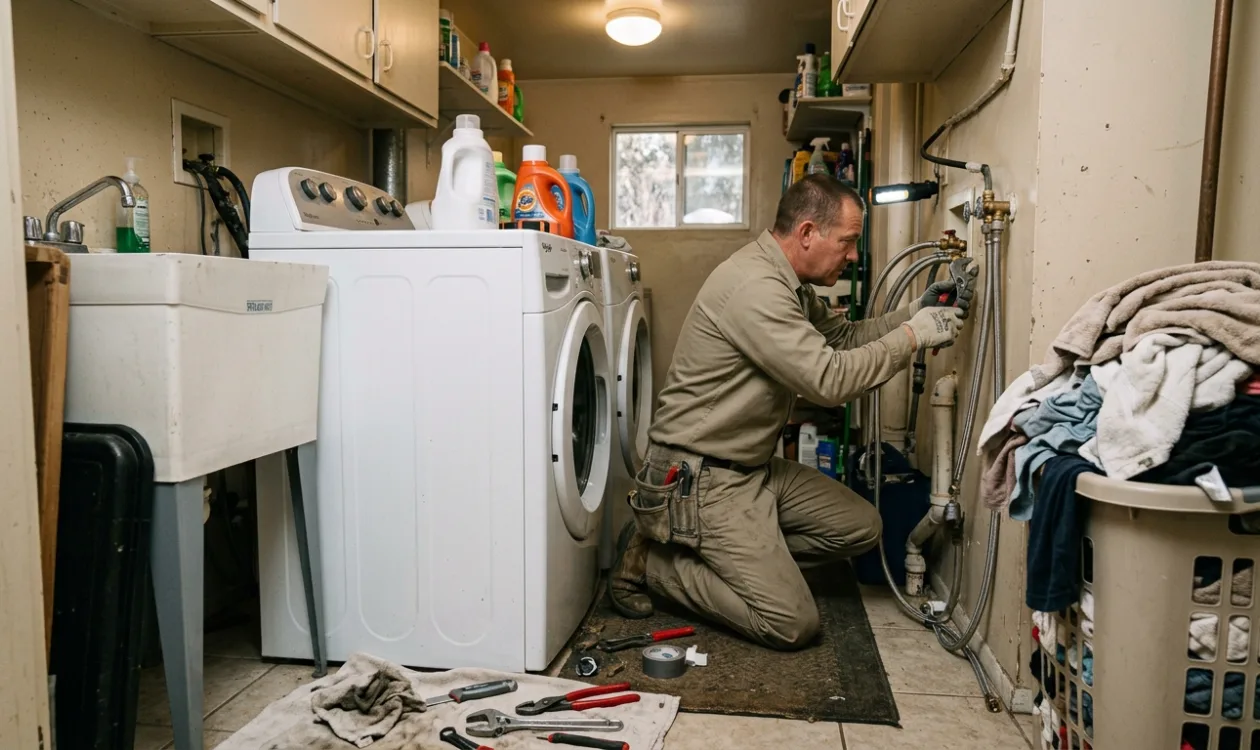
92703 and west Santa Ana · across the eastern line
West Santa Ana holds some of the oldest housing in this part of the county, and the plumbing reflects it. Galvanized supply that has closed up internally, cast iron drains near the end of their life, and clay laterals under decades of tree growth. It is the kind of work that rewards a pro who has seen it before.
Brown water on first draw, drains slow across the whole house, or a lateral that has failed again.
Get a Santa Ana Pro DispatchedSanta Ana is a much larger and older city than Garden Grove, and the part of it we serve most is the western side immediately across the boundary. That area developed earlier than the post-war tracts to the west, and there is a real mix: pre-war bungalows, forties and fifties cottages, sixties tracts and a substantial quantity of apartment and rental housing.
Houses built before the widespread switch to copper were plumbed in galvanized steel. The zinc coating protects the steel until it is used up, after which the steel rusts from the inside and the internal diameter narrows year on year. It is a slow process that ends abruptly in unusable water pressure.
The symptoms are recognizable: showers that fade when a tap opens elsewhere, two fixtures that cannot run together, hot water that takes forever to arrive, and discolored water on first draw. None of these are fixture problems, and replacing taps or cartridges achieves nothing.
A further complication is partial upgrades. Where galvanized pipe was joined to copper without a dielectric union at some point in the past, the two metals corrode aggressively at the joint. Finding one of these is common on older Santa Ana houses and it usually explains a leak in an otherwise sound-looking run.
Cast iron waste pipe corrodes from the inside along the bottom of horizontal runs, where water and solids sit. The internal surface roughens and catches material, and eventually the invert perforates. The house symptom is slow drainage everywhere rather than at one fixture, and cabling gives temporary relief on a pipe that needs replacing.
The same story as the rest of the county. Mortared clay joints, root intrusion, seasonal blockage recurrence, and a decision between maintaining and replacing that only a camera inspection can inform properly.
A large share of the work here is rental property. Landlords and property managers need reliable scheduling, clear written scope and documentation, and the practical judgement to distinguish a repair from a replacement on a building where deferred maintenance has accumulated. Habitability matters too, and a failure that leaves a unit without water or a working toilet is treated as urgent.
Quick facts
Run a cold tap that has not been used overnight. Rusty water for the first several seconds is corrosion shedding from galvanized steel supply pipe. It is the clearest single indicator that the supply system is at the end of its life.
It is the clearest sign that galvanized supply has reached the end of its service life.
Older house strategy
The most expensive way to maintain an old house is one repair at a time. The most economical is to group work and to replace systems rather than sections.
Where supply is galvanized throughout, replacing a failed section moves the weak point rather than removing it. A full repipe in copper or PEX ends the problem and, on a house with a crawlspace, is less disruptive than owners expect because much of the run happens from underneath.
If a kitchen or bathroom is being remodelled, or flooring is coming up, that is the moment to replace pipe. The incremental cost while the structure is open is a fraction of the standalone cost afterwards.
Slow drainage across a whole house in a cast iron system is a pipe condition question, not a blockage question. The camera distinguishes a rough but serviceable pipe from one with holes or a belly, and that distinction is the difference between a maintenance plan and a replacement project.
Deferred maintenance compounds. A schedule of drain maintenance and a plan for the systems nearing end of life costs less over a few years than the sequence of emergency callouts that replaces it. Written condition reports after each visit make that planning possible.
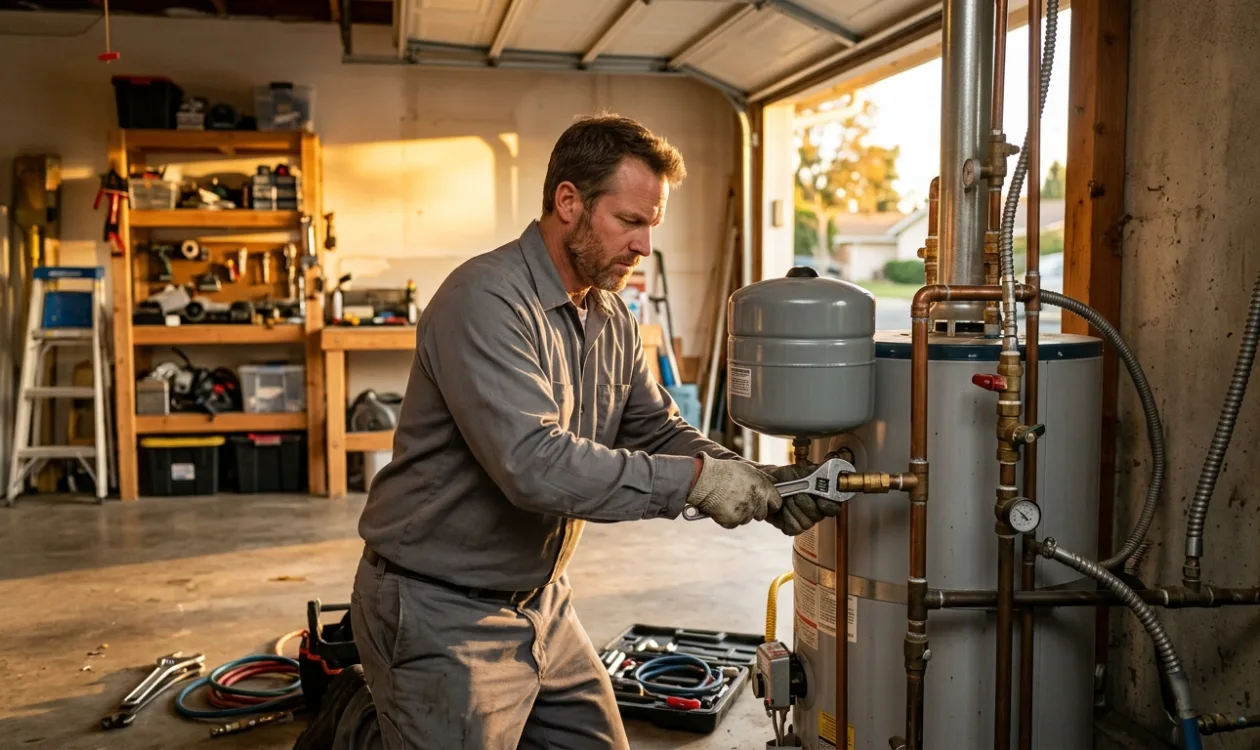
Repipes, sewer replacement, water heater changes and gas work require permits from the City of Santa Ana. It is a different jurisdiction from Garden Grove with its own process, and the contractor should be handling it. On older properties the inspection occasionally surfaces earlier unpermitted work, which is better dealt with now than during a sale.
Most requested here
Retiring galvanized supply that has narrowed internally.
Read moreCast iron and clay lines past their service life.
Read moreSlow-everywhere drainage in older systems.
Read moreFinding failures in mixed-material, much-repaired plumbing.
Read moreCloset, porch and garage installs done to code.
Read moreHabitability failures in rental and multi-family housing.
Read moreHow a call works
On an older house the first job is understanding what is actually in the walls.
If the property is a rental, say who authorizes the work when you call.
Galvanized, copper, cast iron or a mix of all three. That determines the whole approach.
Flow checked at several fixtures and drainage assessed as a system, because old houses fail as systems.
Repair, partial replacement or full renewal, with what each realistically buys you in years.
City of Santa Ana permits where required, with written scope and photographs for owners and managers.
Local questions
Old pipe, rental property, permits and what is worth repairing.
Dispatch is strongest in west Santa Ana and the areas closest to the Garden Grove boundary, and coverage extends further into the city.
Call with the address and it will be confirmed straight away rather than guessed at.
Primarily it is a performance and reliability problem: reduced flow, discolored water and an increasing likelihood of leaks as the steel thins.
It is not a reason for alarm, but it is a reason to plan replacement rather than keep patching.
Less than most people expect, particularly on a raised foundation where much of the run can be done from the crawlspace.
Openings are generally limited to drops at fixtures and a few access points, followed by patching.
Unlikely. A single slow fixture is a local problem; slow drainage throughout points to the main house drain or the lateral.
In cast iron that is usually internal corrosion rather than a clog, which a camera confirms.
Yes. Scheduled maintenance, written condition reports and photographic documentation are standard, and access arrangements are coordinated in advance.
Urgent habitability issues are prioritized.
The City of Santa Ana. Repipes, sewer replacement, water heater installation and gas line work normally require a permit and inspection.
Confirm the contractor is pulling it. Unpermitted work becomes a problem at sale or refinance.
Often, yes. Mixed materials, undocumented alterations and joints between eras are common failure points and they take longer to trace.
It is worth mentioning up front so the pro arrives expecting it.
That is a maths question rather than a plumbing one. Compare the repipe cost against the running cost of emergency callouts, tenant disruption and water damage over the years you intend to hold it.
On a fully galvanized system, the repipe usually wins over a five to ten year horizon.
Next door
Immediately across the boundary.
Comparable older housing stock.
A short distance west.
South-west of the city.
92703 · older homes, experienced pros
Diagnosis of the system rather than the symptom, and honest numbers on what replacement actually buys.