Water heater installation
When the tank is leaking from the body and repair is not an option.
Read more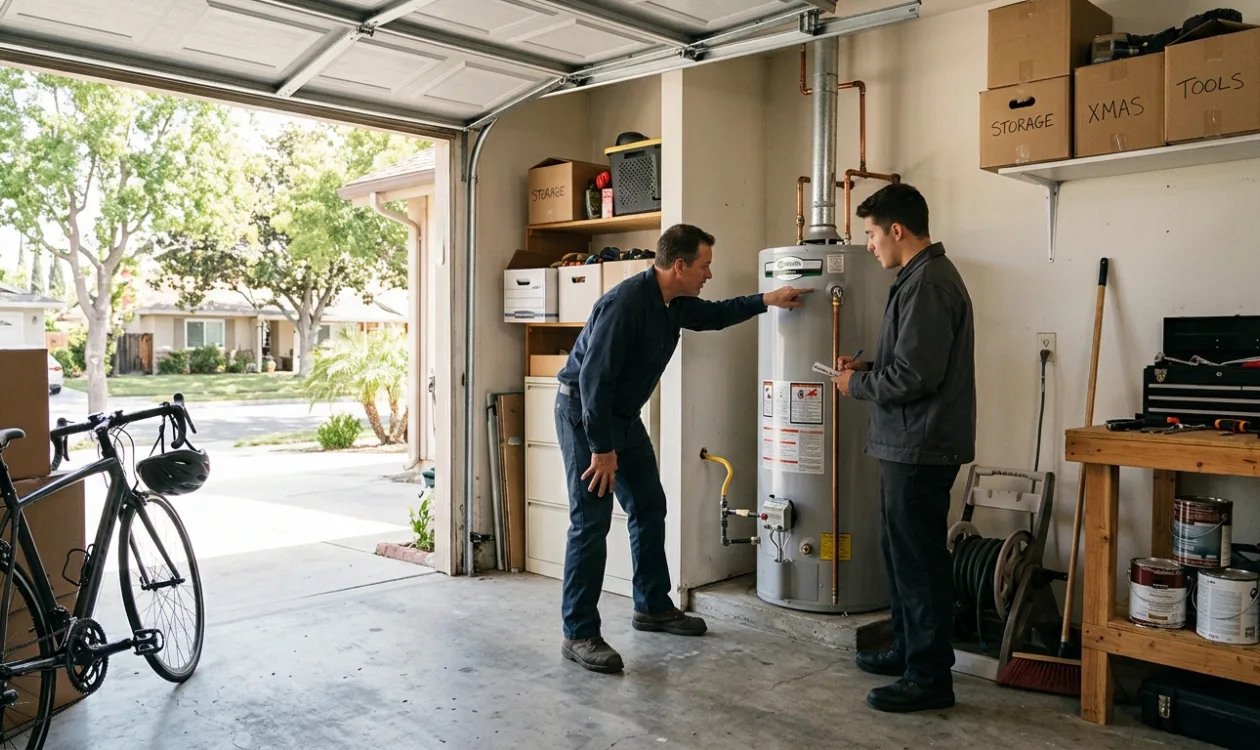
Hot water back today
Hot water that runs out halfway through a shower, a tank that rumbles like gravel in a dryer, a pilot that will not stay lit. Most of those are repairs, not replacements, and hard local water is usually somewhere in the story.
Have the age and capacity off the data plate ready if you can reach it safely.
Call (657) 354-1942 TodayA storage water heater is a simple machine: a lined steel tank, a heat source, a thermostat, an anode rod sacrificing itself to protect the lining, and a relief valve. Nearly every fault traces to one of those parts, or to the mineral content of the water passing through.
That last factor matters more in Southern California than most places. Imported water here is hard, and every gallon heated leaves calcium and magnesium behind. Over years that becomes a layer of sediment across the bottom of a gas tank, or a crust on the elements of an electric one.
The most common call. In a gas heater, sediment on the tank floor insulates the water from the burner below it, so the same forty gallons behave like twenty-five and take longer to recover. Rumbling and popping while heating is the diagnostic sound: that is water flashing to steam under the sediment layer. Flushing helps if it is caught early; a heavily sedimented tank may not fully recover.
The other frequent cause is a broken dip tube. That tube carries incoming cold water to the bottom of the tank; when it cracks or breaks off high, cold water mixes straight into the hot outlet and you get lukewarm water from a working heater.
In electric units, a failed lower element produces exactly the classic complaint: some hot water, then cold, because only the top of the tank is being heated.
On gas, the ladder is pilot, thermocouple, gas valve, thermostat. A pilot that lights and drops out is usually a failing thermocouple, an inexpensive part. On newer sealed-combustion units it may be a blocked air intake screen, which is often just lint and dust in a garage installation. On electric, a tripped high-limit cutoff or a failed upper element is the usual answer, and a repeatedly tripping cutoff is a symptom rather than the fault.
Where the water is coming from decides everything. Weeping at a fitting, a failed drain valve, or a relief valve discharging are all repairable. Water from the tank seam or the bottom of the jacket means the inner tank has corroded through, and no repair exists for that, the anode rod was consumed years earlier and the lining has been under attack since. A tank leaking from the body is a replacement.
Rusty hot water only, with cold running clear, suggests corrosion inside the tank. A rotten-egg smell in hot water is usually a reaction between the anode rod and bacteria in the water; changing the anode type resolves it in most cases.
Never plug it. A temperature and pressure relief valve dumping water is either doing its job because pressure or temperature is genuinely too high (a failed pressure regulator, a thermostat running away) or the valve itself has failed. Either way it is a same-day call, because the valve is the last safety device on a pressure vessel.
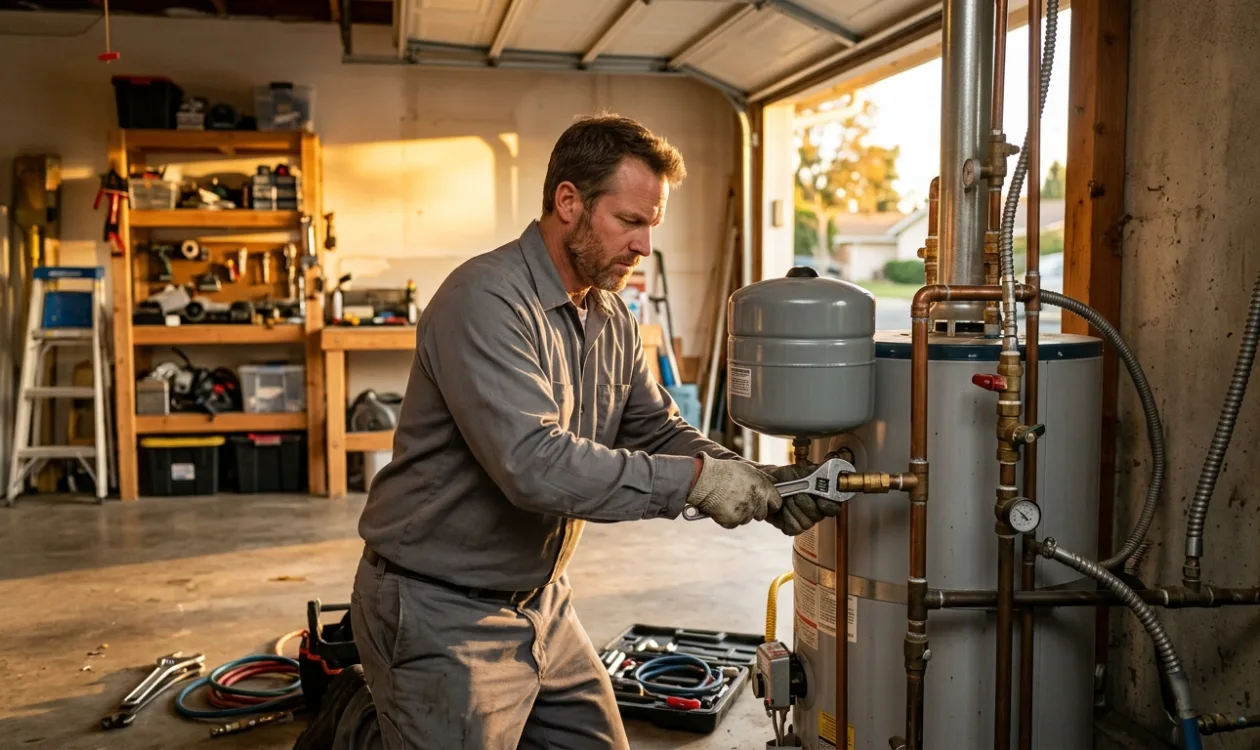
Serial numbers encode the manufacture date. Age is the biggest factor in whether repair or replacement makes sense, and it is on the label.
Hard water makes tank flushing genuinely worthwhile here. It is the cheapest thing you can do to extend service life.
It is the last safety device on a pressure vessel. If it is releasing, something upstream needs fixing.
California requires water heaters to be seismically strapped. It is quick to verify and quick to correct, and worth doing at any service visit.
Sediment, thermostat, element, dip tube and gas valve all produce similar symptoms.
How a repair visit runs
You should hear what failed and why before you hear what it costs.
Have a Pro Take a LookWhether repair makes sense depends on the tank age as much as the fault.
Volume, temperature, recovery time and any noises establish which subsystem is at fault before anything is opened.
Gas: pilot, thermocouple, valve, thermostat. Electric: elements, thermostats, high-limit. Plus dip tube and sediment on both.
A part fault on a sound tank is a repair. A corroded tank is not repairable, and you should be told that plainly rather than sold a part.
Relief valve, seismic straps, venting, gas connection and temperature setting verified before the visit ends.
Local ground truth
Hard water is the dominant factor. Imported Southern California water leaves scale in every heated vessel it passes through. In a storage tank that means a growing sediment bed reducing usable capacity and forcing the burner to work through an insulating layer. It is the reason a heater that might last fifteen years elsewhere often does not here, and it is the reason annual flushing is not a maintenance upsell in this city but a genuine life-extender. It is also the strongest argument for softening or filtration, which protects heaters, tankless units, dishwashers and fixture cartridges at once.
Garage installations are the local norm. Across the postwar tracts, water heaters sit in attached garages, which is convenient for service and hard on equipment. Lint and dust block combustion air intakes on sealed-combustion units. Vehicles and storage crowd the unit, restricting airflow and access. Water is not noticed until it reaches the driveway. And because the location is out of daily sight, a slow drip goes unmentioned until the slab is stained.
Seismic requirements. California requires water heaters to be strapped against earthquake movement. Plenty of older local installations have one strap where two are required, or straps that were never properly anchored. Any service visit is a reasonable moment to correct it, and it becomes mandatory when a unit is replaced.
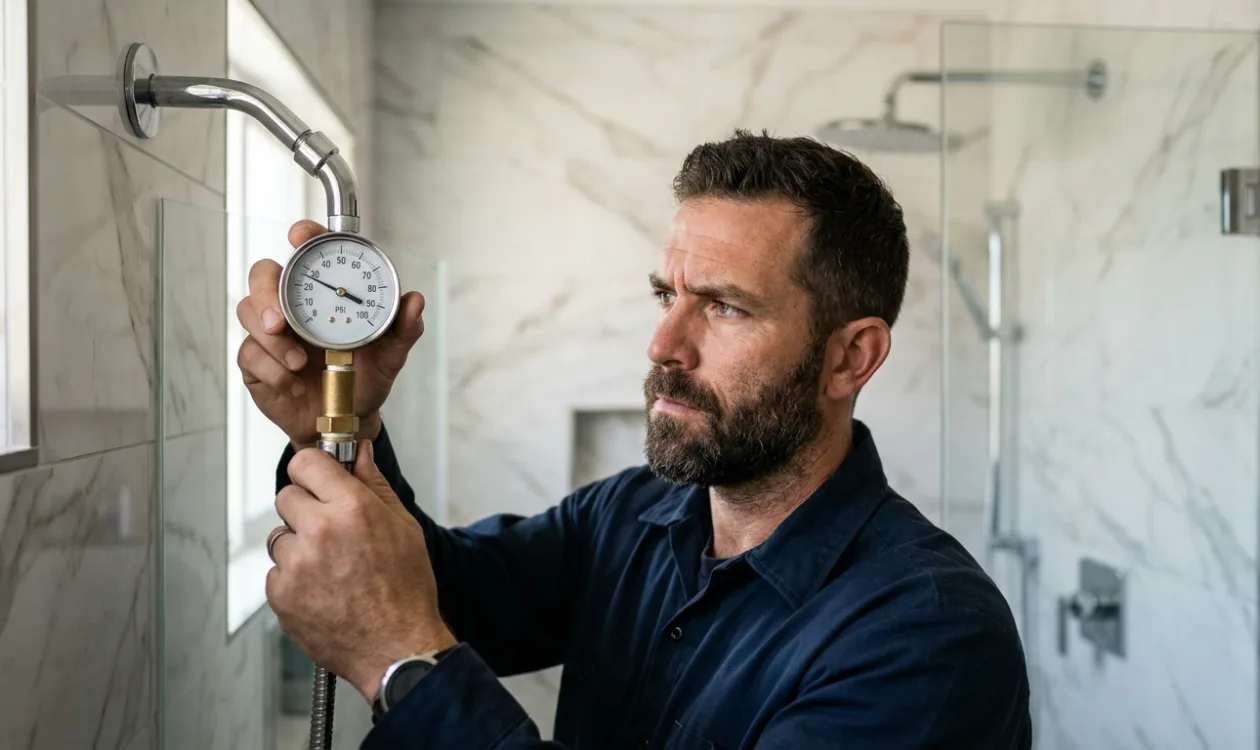
Pressure feeds the problem. A failed pressure regulator pushing 90 psi or more into the house stresses a water heater continuously, and it is a common reason for a relief valve to start discharging. Checking static pressure with a gauge is part of a competent water heater diagnosis, not a separate service.
Condo and townhouse installations put heaters in closets rather than garages, which changes several things: combustion air and venting requirements are tighter, space constrains what can replace what, and a leak has a finished floor under it instead of a slab. In shared-wall buildings a leaking heater becomes a neighbor's problem quickly, which is why a drip pan with a routed drain matters there.
The framework is straightforward. A tank under about eight years old with a part fault is worth repairing almost always. Between eight and twelve, it depends on the cost of the repair against remaining life, and whether the tank is heavily sedimented. Past twelve, or any tank leaking from the body, and the money is better spent on a replacement, which is also the moment to decide between another tank, a tankless unit, or a hybrid, and to have the venting and pressure situation properly assessed.
Water heater questions
Age and symptom together answer most of them.
Usually sediment. Hard water deposits minerals across the bottom of the tank, which both takes up volume and insulates the water from the burner, so effective capacity and recovery rate both drop. A broken dip tube produces the same complaint by mixing cold water into the hot outlet, and in an electric heater a failed lower element does too. All three are diagnosable in one visit.
Not immediately dangerous, but it is a clear signal. The noise is water flashing to steam beneath a sediment layer on the tank floor. It means efficiency is dropping and the tank floor is being thermally stressed. Flushing may help if it is caught early; a heavily sedimented tank in an older heater is often a sign to start planning replacement.
Usually not. The most common cause is a failing thermocouple, which is an inexpensive part and a quick replacement. Other causes include a blocked combustion air intake screen (common in garage installations where lint accumulates), a draft problem, or a gas control valve at the end of its life. The diagnosis is quick.
It depends entirely on where it is coming from. Weeping fittings, a failed drain valve, a leaking relief valve or condensate are all repairable. Water emerging from the tank seam or the bottom of the jacket means the inner tank has corroded through, and there is no repair for that. A plumber can tell the difference in minutes.
Local hard water tends to shorten service life relative to published expectations. Plenty of tanks here give eight to twelve years, and well-maintained ones go longer. Annual flushing and replacing the anode rod when it is consumed both meaningfully extend that, which is why the maintenance is worth the small cost in this water.
It depends on the repair. An inexpensive part fault on a tank that is otherwise sound is worth doing. A major repair on a heavily sedimented ten-year-old tank is money going into something with limited remaining life. Ask for the repair price and the replacement price together and decide with both numbers visible.
It is a sacrificial metal rod inside the tank that corrodes preferentially so the tank lining does not. Once it is consumed, the tank itself starts corroding. Checking and replacing it is inexpensive relative to a new heater, and in hard water it is one of the highest-value maintenance items there is, but it does have to be done before the tank starts leaking, not after.
Typically a reaction involving the anode rod and sulphate-reducing bacteria in the water, producing hydrogen sulphide. It is unpleasant rather than dangerous, and switching to a different anode material usually resolves it. Sanitizing the tank is sometimes done alongside.
Yes. California requires water heaters to be braced or strapped against earthquake movement, and correct installations use straps at upper and lower positions anchored into structure. Many older local installations are under-strapped or poorly anchored. It is inexpensive to correct and a reasonable thing to ask about at any service visit.
In this water, yes, and it protects more than the heater, dishwashers, tankless heat exchangers, shower cartridges and faucet aerators all suffer from scale. Softening or filtration is a separate installation with its own maintenance, but for a household that has already replaced appliances early because of scale, the arithmetic often works out.
Repair pricing
A thermocouple and a leaking tank sit at opposite ends of the range.
Ask About Repair PricingRelated work
When the tank is leaking from the body and repair is not an option.
Read moreThe upgrade path, with the descaling schedule this water requires.
Read moreTreat the cause rather than replacing scaled appliances early.
Read moreWhere we do this work
Garage installations across the ranch tracts.
Postwar housing with original heater locations.
Mixed residential along the boulevard corridor.
Unincorporated pocket at our southern edge.
Garden Grove & northwest Orange County
Most no-hot-water calls are same-day fixes rather than replacements.
Cold Shower This Morning?