Hydro jetting
The right tool for grease-loaded commercial kitchen lines.
Read more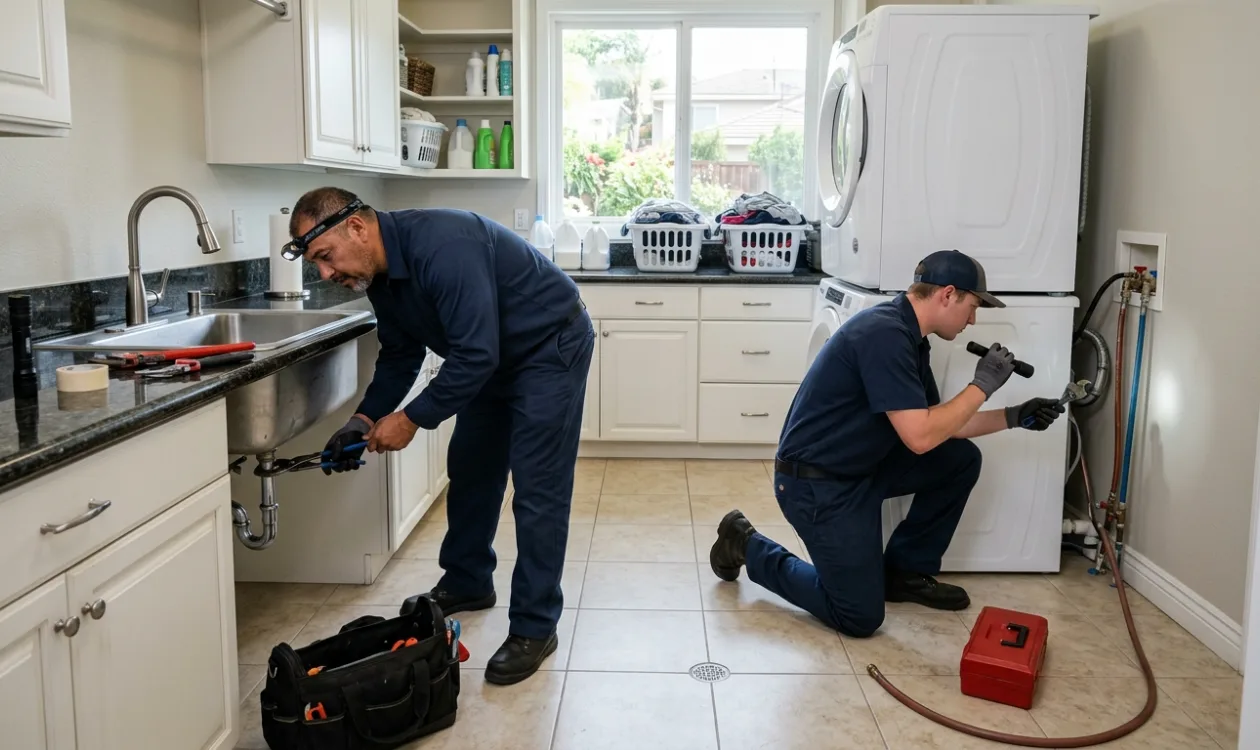
Commercial · restaurants, retail, multi-unit
A blocked line in a restaurant is lost revenue by the hour. We connect commercial property managers, restaurant operators and building owners across Garden Grove with plumbing pros who work around trading hours and quote before they start.
Tell us the property type and whether you are trading right now. That decides the response.
Call (657) 354-1942 for Commercial ServiceThe pipes look similar and almost nothing else is. Commercial work is defined by three things residential work is not: continuous heavy use, consequences measured in lost trading time, and a regulatory layer (health inspections, backflow testing, grease interceptor requirements) that a house never deals with. A pro who is excellent in houses is not automatically the right person for a restaurant kitchen at 5am.
The clearest example is a kitchen waste line. A residential kitchen branch sees a few gallons of greasy water a day. A restaurant line sees hundreds, hot and loaded with fats that cool and congeal on the pipe wall. The line does not block suddenly; it narrows steadily over months until one busy service tips it over. Clearing that with a cable machine punches a hole through the middle of the buildup and buys weeks. Jetting scours the pipe wall back to full diameter and buys a year. Which is why commercial kitchens get jetted, not snaked, and why sensible operators do it on a schedule rather than on an emergency.
Food service properties in Garden Grove operate under grease control requirements, and interceptors (whether an under-sink unit or an in-ground vault) need pumping and inspection on a cycle appropriate to the volume of the kitchen. An interceptor that has not been serviced stops intercepting, which puts grease straight into the lateral and eventually into the public sewer, where it becomes an expensive conversation with the sanitation district rather than a plumbing bill.
The plumbing side of that is the inlet and outlet plumbing, the sample box, the vent, and the lines feeding it. Pumping is a separate specialist service, and a good commercial plumber will tell you which of your two problems you actually have.
Apartment buildings, condo associations and duplexes bring a specific set of problems: shared vertical stacks, common laterals, and the diagnostic question of which unit a problem originates in. A backup on a ground-floor unit is frequently caused by behavior three floors up. Sorting that out means camera work in the stack and the lateral rather than repeated clearing of the same fixture.
The other multi-unit reality is water shut-offs. Shutting a riser affects tenants, so the work has to be scheduled, noticed, and completed in the window promised. That coordination is as much a part of the job as the plumbing.
Retail and office restrooms fail from volume rather than age. Flush valves, sensor faucets, floor drains that dry out and let sewer gas up, and lavatory traps that get abused. The right approach there is preventive: a maintenance visit that services flush valves, checks trap primers and clears floor drains costs a fraction of a customer-facing restroom being closed.
Medical and dental suites add specific fixtures and backflow requirements. Those get handled with the paperwork they need, not improvised around.
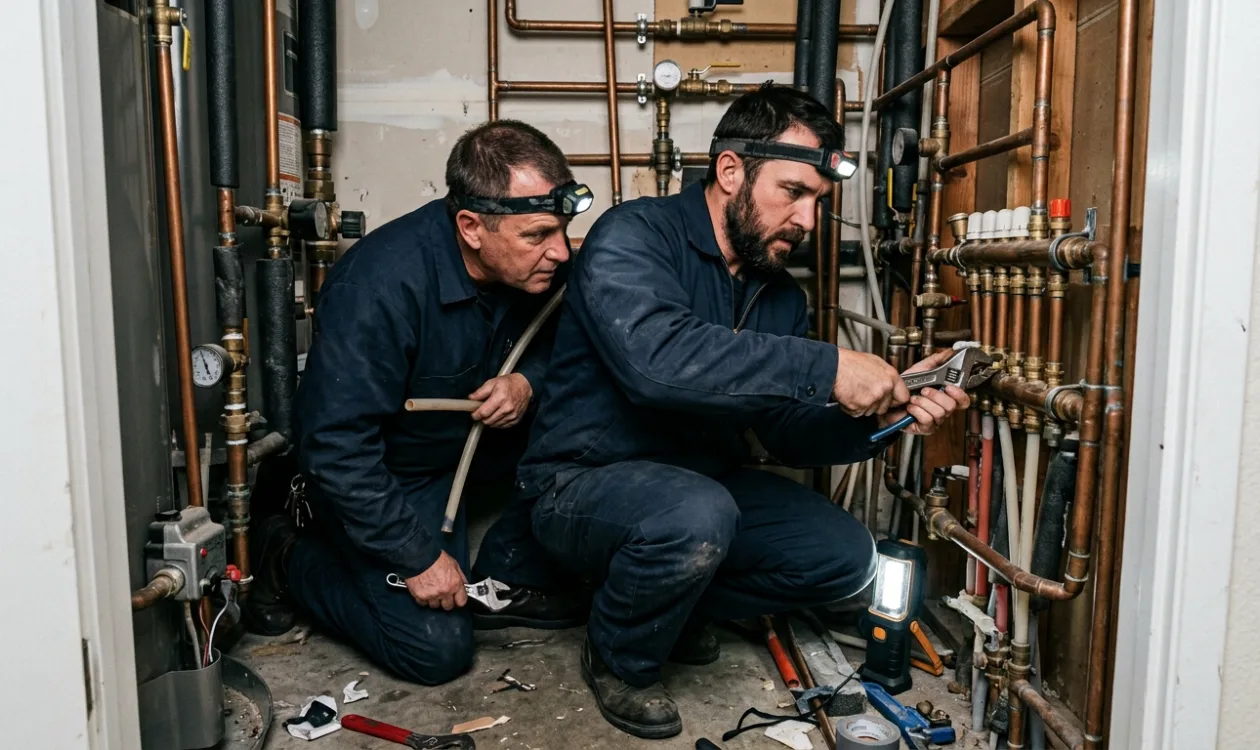
Commercial properties with irrigation, boilers, fire lines or process water need backflow prevention devices, and those devices require periodic testing by a tester holding the appropriate state approval, with results filed. It is a small, scheduled job that becomes a compliance problem when it lapses. If your property has an assembly and you are not sure when it was last tested, that is worth a phone call.
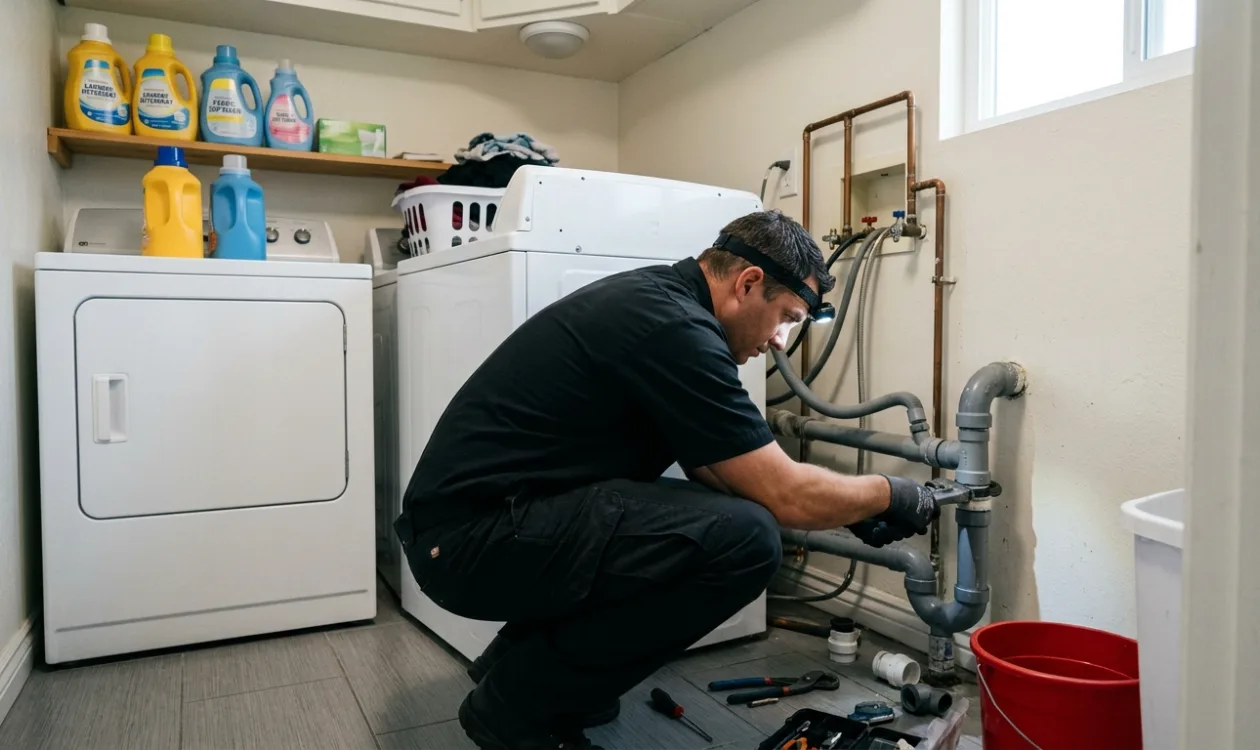
A jetting visit booked for a Tuesday morning costs a fraction of the same line failing during Saturday service.
Every commercial property should have accessible cleanouts and somebody on staff who knows where they are. It shortens every future call.
If your property has a backflow assembly on irrigation or process water, it needs testing on a cycle. Lapses become compliance issues.
Grease lines and floor drains are a different job from a residential clog, with different equipment.
How commercial calls run
The plumbing is the straightforward part. Scheduling it so you do not lose a service is the part that takes experience.
Discuss a Maintenance ScheduleScheduled jetting costs a fraction of an emergency shutdown on a Friday night.
Restaurant mid-service, closed retail unit, or occupied apartment block, each gets a different response and a different window.
Camera in the line where it matters, cleanouts located, and the actual condition of the pipe established before any number is quoted.
Scope, equipment, timing and access all confirmed in writing terms you approve before mobilization.
Work finished in the agreed window, line re-tested or re-cameraed, and a record left for your files.
Local specifics
Garden Grove's commercial base is unusually food-heavy for a city its size. The Little Saigon restaurant concentration along Bolsa and Brookhurst, the Korean restaurants and markets along Garden Grove Boulevard, and the strip centers throughout the city add up to a very large number of commercial kitchens per square mile. That shapes the work: grease is the dominant commercial plumbing problem in this city, and the operators who treat jetting and interceptor service as scheduled maintenance are the ones who do not lose services.
The second characteristic is age. A great deal of the commercial building stock dates from the sixties and seventies, which means cast-iron waste lines. Cast iron in a commercial kitchen environment corrodes from the inside, and after fifty years of hot greasy water the interior is rough enough to catch everything that passes. A line that blocks repeatedly despite good cleaning is often telling you the pipe itself is failing, and camera footage will show it. Lining or replacing a section is the real fix at that point.
Third is the hospitality corridor around Harbor Boulevard and the resort area, where hotels and larger food operations have plant-room plumbing, booster pumps, recirculation systems and mixing valves that are closer to light industrial work than to anything residential. Those properties need a pro who has worked on that scale, and the scoping call for them is longer and more detailed.
Multi-tenant strip centers frequently share a single lateral to the street, and that is a recurring source of dispute. One tenant's grease becomes another tenant's backup, and the property manager is left arbitrating. Camera work establishes where the problem originates, and a documented survey is worth having before the conversation rather than during it.
Health inspections do not wait for plumbing repairs. If you have an inspection coming and a known plumbing issue (a floor drain that will not clear, a hand sink with no hot water, a leaking interceptor lid) getting it addressed before the visit is far cheaper than a re-inspection. Say so when you call and the timing gets prioritized accordingly.
New restaurant build-outs in existing shells are common here, and the plumbing scope is usually larger than the tenant expects: floor sinks, indirect waste connections, interceptor sizing, hand sinks in the right places, and a gas load calculation for the cooking line. Bringing a plumber into the planning early rather than at the point of inspection saves both money and weeks.
Commercial questions
Scheduling, scope and what commercial work involves that residential does not.
Yes, and for most commercial properties that is the default. Before opening, after close, or on a closed day, whichever loses you the least revenue.
Say when your trading windows are on the call and the visit is scheduled around them.
Because grease coats the pipe wall and narrows it steadily. Cable clearing punches through the middle and restores flow briefly; it does not remove the buildup.
Jetting scours the wall back toward full diameter. If a jetted line still blocks quickly, the pipe itself is likely failing and a camera survey will show it.
It depends entirely on volume and menu. A high-output fryer kitchen needs it far more often than a coffee shop. Quarterly to twice-yearly covers most food service properties here.
The right interval is the one where you never have an emergency. A survey after the first jetting sets a realistic schedule.
The plumbing around them, yes, inlet and outlet lines, sample boxes, vents and lids. Pumping the interceptor itself is a separate specialist service with its own manifests.
A good commercial plumber will tell you which of the two your problem actually is instead of billing you for the wrong one.
That depends on your lease and where the problem originates, which is exactly why camera documentation matters. A recorded survey showing the source of a blockage settles most of these disputes.
We can scope the survey specifically to produce that documentation.
Yes. Shared stacks, common laterals and coordinated shut-offs are routine commercial work. The scheduling and tenant notice are part of the job.
For recurring problems in a building, camera work in the stack usually finds the cause faster than clearing the same fixture repeatedly.
Commercial properties with irrigation, boilers, fire lines or process water generally need backflow assemblies tested periodically by a tester holding the right state approval, with results filed.
If you are unsure when yours was last tested, that is worth sorting before it becomes a compliance letter.
Yes. Tell us the date on the call. Floor drains that will not clear, hand sinks without hot water and leaking interceptor lids are all common inspection findings and all quick to address in advance.
A pre-inspection visit is much cheaper than a re-inspection.
Yes, and the earlier the better. Floor sinks, indirect waste, interceptor sizing, hand sink placement and the gas load for the cooking line all get decided at planning, not at inspection.
Bringing a plumber in during design saves both cost and weeks of schedule.
By scope rather than by fixture. Equipment required, access, whether the work is after hours, and how much documentation you need all factor in, and it is quoted before mobilization.
Call (657) 354-1942, describe the property and the problem, and you will get a realistic range on the phone.
Pricing
Scope, access, after-hours timing and equipment, quoted before mobilization, not after.
Ask About Commercial RatesRelated work
The right tool for grease-loaded commercial kitchen lines.
Read moreDocumentation that settles shared-lateral disputes.
Read moreFloor drains, prep sinks and branch lines.
Read moreWhere we do this work
Dense restaurant and market concentration.
Strip centers and shared laterals.
Restaurants with heavy kitchen output.
Neighboring city, commercial and multi-unit.
Garden Grove & northwest Orange County
Most commercial work here happens before opening or after close. That is normal, not a premium surprise.
Arrange After-Hours Work