Hydro jetting
For lines that keep closing back up, or where the cause is grease rather than solids.
Read more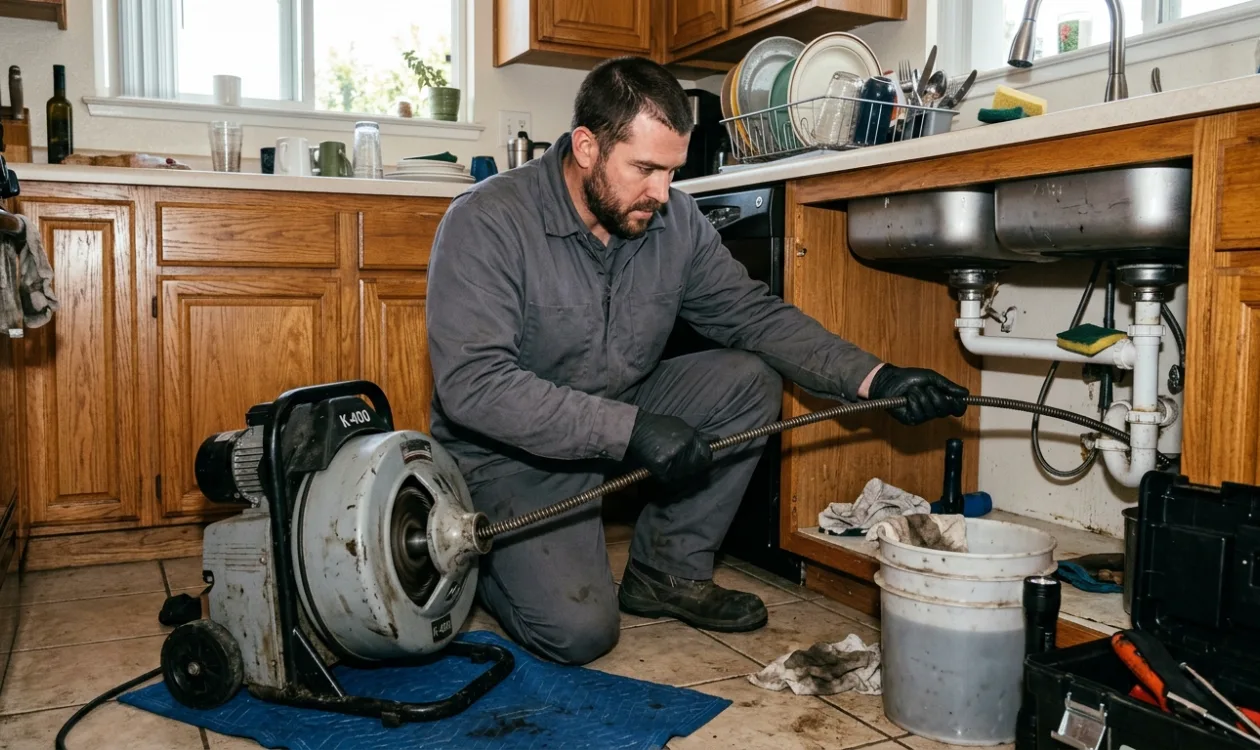
The call we take most
A tub that empties in slow motion, a toilet that burps when the washing machine drains, a kitchen sink that floods the laundry basin. Cleared the same day, and then explained, so you know whether it is coming back.
Tell us which fixtures are affected, that alone narrows down where the blockage sits.
Call (657) 354-1942 for Same-DayDrain problems divide cleanly into two categories, and which one you have determines everything about the visit.
A branch line blockage affects one fixture or one group. The bathroom sink drains slowly but the tub is fine. The kitchen sink backs up but nothing else does. The cause is local and usually organic: soap and hair building into a mat in a lavatory arm, grease and food solids narrowing a kitchen line, a child's toy in a toilet trap, tissue caught on a rough joint.
A main line blockage affects everything downstream of it, and the tell is that waste appears in the lowest fixture in the house, a ground-floor shower, a tub, a floor drain in a garage or laundry. Flush a toilet and the shower gurgles. Run the washer and the tub fills. That pattern means the obstruction is in the building drain or the lateral to the street, and the cause is usually roots, collapsed pipe, or accumulated scale in old cast iron.
Gurgling is the most useful early signal, and the most ignored. It means air is being pulled through water because the drain is partially obstructed and cannot vent properly. A slow drain that responds to a plunger and then slows again within days is telling you the obstruction was never removed, only disturbed. A smell of sewage that comes and goes suggests a dry trap or a venting problem rather than a blockage. Repeated backups on a rough schedule (every spring, every few months) is the signature of root intrusion, which is seasonal because roots chase water.
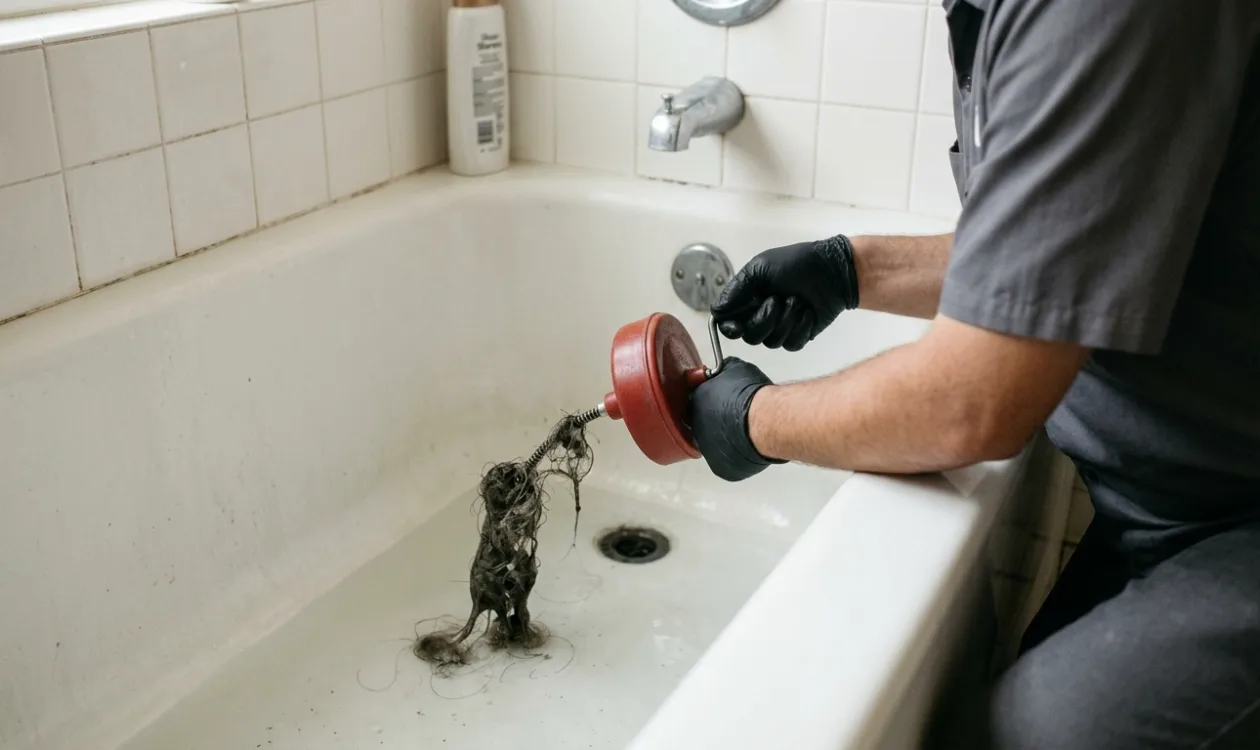
Cabling (a rotating steel cable driven down the line) is the standard first move. It punches through and pulls back the obstruction, and on a branch line with a soap or hair mat that is genuinely sufficient. On a main line it clears the immediate blockage and restores flow, but it leaves the pipe wall coated and it shears roots off rather than removing the intrusion.
Hydro jetting uses high-pressure water through a specialized nozzle to scour the pipe wall back to its full diameter, flushing grease, scale and root hair out rather than boring a hole through it. It is the right answer when a line keeps closing back up, when the cause is grease, or when a camera shows heavy buildup. It is not appropriate for pipe that is already structurally compromised, which is why a camera inspection sometimes comes first.
Camera inspection is diagnosis. Down a main line, a camera answers questions that guessing cannot: is this clay pipe with root intrusion at the joints, cast iron scaled to half its bore, a bellied section holding standing water, or a break with soil visible? Those four findings lead to four completely different recommendations, and the camera also locates the defect's depth and position for any excavation.
Fixture-side work covers the rest, pulling and cleaning a P-trap, replacing a corroded trap arm, resetting a toilet that has been leaking at the flange, clearing a disposal that has jammed and thrown the branch line off.
If waste is coming up anywhere, stop using the dishwasher, washing machine and showers. Every gallon in adds a gallon that has nowhere to go.
They rarely clear a real blockage, they damage older cast iron and they turn a routine visit into a hazardous one for whoever opens the line. Tell the plumber if you have poured any in.
Most local homes have an accessible cleanout outside, often near a bathroom wall or at the side of the garage. Knowing where it is saves time on arrival.
A line that blocks on a schedule does not need clearing again. It needs a camera, and then a decision about the pipe itself.
One slow fixture is a branch line. Several at once is the main. Different jobs, different tools.
How the visit runs
The second half is what stops you calling again in three months.
Get the Line Cleared TodayStop running water into it in the meantime, including dishwashers and laundry.
Which fixtures are affected, and whether waste is appearing in the lowest one, establishes where the obstruction sits before any tool comes out.
Cleanout, roof vent, or the fixture itself. The access point determines what can be run down the line and how far.
Cabling for soap, hair and solids; jetting where the cause is grease, scale or recurring roots and the pipe can take it.
Flow tested under load. On main lines a camera confirms the line is genuinely clear and shows you what caused it.
Local ground truth
Three local factors drive most of the drain calls in this city, and they sort neatly by neighborhood.
Mature street trees over old laterals. Much of Garden Grove was planted out at the same time it was built, so decades-old trees now sit directly above clay and cast-iron sewer laterals. Roots find the joints, get in, and grow into the flow. This is the cause behind almost every "it backs up every few months" call. Cabling shears the roots and buys a season; jetting removes the mass and restores the bore; and if a camera shows the joints are open or the pipe is cracked, lining or replacement is what actually ends it.
Cast iron near the older core. The early-1900s craftsman housing around Historic Main Street and the Village Green, plus the earliest tracts, was drained in cast iron. Cast iron scales internally over decades, and the rough interior catches everything. A line that has lost half its diameter to tuberculation will block repeatedly no matter how carefully anyone uses it. Jetting can restore a great deal of that bore; where the pipe wall has failed, replacement or lining is the honest answer.
Density and commercial use through the middle and south of the city. Along the Garden Grove Boulevard corridor and down through the Little Saigon area shared with Westminster, restaurant and retail kitchens put far more grease and solids into drain lines than a house does. That is a maintenance-interval problem rather than a one-off repair, and it is why grease-line jetting on a schedule is a real segment of the work here.
Two more things worth knowing. In condo and townhouse buildings, drain and vent stacks run inside shared walls, so a blockage can affect several units and may sit in plumbing the association maintains, documentation of what was found is worth as much as the clearing. And in West Garden Grove's larger-lot streets, laterals simply run further from house to street, which means more joints, more distance for roots to find, and a camera survey that takes longer but tells you more.
Drain questions
Especially the one about whether it will happen again.
Usually not. A single slow fixture with everything else draining normally points to a branch line, a soap and hair mat in a lavatory arm, or grease narrowing a kitchen line. Main line problems announce themselves differently: waste appears in the lowest fixture in the house, and running one thing affects another.
Because the two share a drain line downstream and it is partially obstructed. The washer discharges a large volume quickly, the restricted line cannot carry it, and the pressure pushes air back through the nearest water seal. It is an early warning that the shared line is closing up, and worth dealing with before it backs up completely.
For a real blockage, yes. They seldom clear an actual obstruction, they can damage older cast iron and rubber gaskets, and they sit in the line as a caustic hazard for whoever opens it next. If you have already used one, say so when you call so the plumber can take precautions.
Because the cause was never removed. Repeat blockages on a rough schedule are the classic signature of root intrusion in an older lateral, and cabling only cuts the roots back to the pipe wall. The fix is to establish what the pipe looks like with a camera, then either jet it and set a maintenance interval, or line or replace the failed section.
A cable is mechanical: it bores through the obstruction and pulls material back. Jetting is hydraulic: high-pressure water scours the full circumference of the pipe wall and flushes debris downstream. Cabling is right for soap, hair and solid objects. Jetting is right for grease, scale and root hair, and for any line that keeps closing back up, provided the pipe is structurally sound enough to take it.
Sometimes, but it is not the first choice. An accessible ground-level cleanout is faster, safer and gives better access to the line. Roof vents get used when there is no cleanout, which happens in some older local homes, or when the geometry of the blockage requires approaching from that direction.
On main lines it is usually recommended, and on any recurring blockage it should be considered mandatory. Clearing without looking means you know the water is moving again but not why it stopped. On a simple branch line blockage a camera is generally unnecessary.
Chemical root treatments can slow regrowth inside a line and are sometimes used as part of a maintenance plan, but they do not repair the opening the roots came through, and they do not restore a pipe that has cracked. Treat them as a delaying measure, not a fix.
Keep grease out of kitchen lines, it hardens as it cools, and it is the single biggest self-inflicted cause. Use strainers, and treat "flushable" wipes as not flushable, because they do not break down and they catch on every rough joint. In a house with a known root-prone lateral, a scheduled jetting interval is cheaper than emergency clearing.
Treat it as one. Waste surfacing in the lowest fixture means the main line is blocked and everything you send down the drains has nowhere to go. Stop using water throughout the house and call. It is both a plumbing problem and a contamination problem, and the longer it sits the more of your flooring is involved.
Cost drivers
Access, line length and whether the cause is grease or roots set the number.
Ask About Drain PricingRelated work
For lines that keep closing back up, or where the cause is grease rather than solids.
Read moreLook at the pipe before spending on a repair. It answers what cabling cannot.
Read moreWhen the camera shows a cracked, bellied or root-shattered lateral.
Read moreWhere we do this work
Cast-iron drains under early-1900s housing.
Dense corridor with heavy commercial drain use.
Post-war tracts with mature street trees.
Unincorporated pocket on our southern edge.
Garden Grove & northwest Orange County
Waste in the lowest fixture in the house means the main, and that does not wait.
Backing Up Right Now?