Sewer line repair
Spot repair or full replacement, chosen from what the camera actually showed.
Read more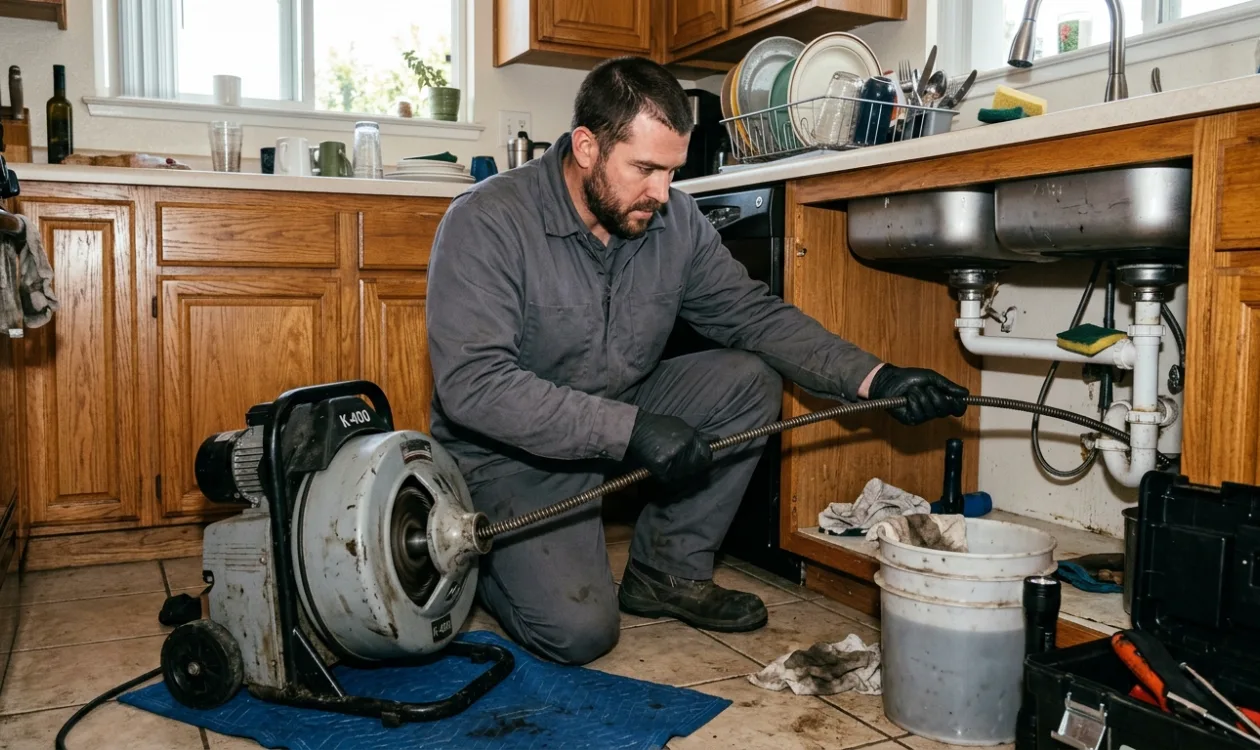
Look before you spend
Every honest sewer quote starts here. A camera run down the lateral turns guesswork into distances, depths and a picture of the actual defect, which is the only basis for choosing between clearing, lining and replacing.
Buying a house, or clearing the same line for the third time? Both are good reasons.
Call (657) 354-1942 to BookA sewer camera is a high-resolution head on a flexible push rod, fed into the drain line through a cleanout and driven the length of the run while a monitor shows the interior of the pipe. A locating transmitter in the head lets a technician trace the camera's position and depth from the surface, so a defect seen at forty-one feet can be marked with paint on the lawn above it.
That combination (image plus position) is what makes the inspection valuable. Any competent plumber can tell you a line is blocked. A camera tells you why, where, how deep, how long the compromised section is, and whether the rest of the pipe is worth keeping.
Material. Clay, cast iron, ABS, PVC, Orangeburg. Each has a different failure pattern and a different repair path, and each is immediately recognizable on screen.
Root intrusion, and how bad. Fine root hair at one joint is a maintenance situation. Ropes of root filling the bore at four joints is a lining or replacement conversation.
Cracks, breaks and offsets. Longitudinal cracking, a shear break with soil visible, two sections shifted past each other. These determine whether trenchless methods are even possible.
Bellies. Standing water in the pipe with the camera parked in it is the signature. A belly holds sediment permanently and is the one defect that trenchless lining cannot correct.
Scale and tuberculation. In old cast iron, a rough mineral crust that has taken half the diameter. Crucially, the camera also shows whether the pipe wall behind it is sound enough to survive being jetted clean.
Foreign objects and bad workmanship. A collapsed liner from a previous repair, a coupling installed off-line, construction debris, a branch tied in against the flow, or a section of pipe someone reversed. These turn up more often than people expect.
Four situations dominate. A recurring blockage, where the interval between backups has been shortening, the camera answers why, and cabling it again does not. Before any significant sewer spend, because no one should authorize excavation or lining on a description. Before buying a house, particularly anything built before the 1970s or sitting under mature street trees, where a lateral survey is one of the highest-value inspections available. And to settle responsibility, in condo and townhouse buildings where the question is whether the failure is in your plumbing or in a shared stack the association maintains.
A recording of the run, notes logging each defect by distance from the access point, the material and diameter of the pipe, marks on the surface showing route and depth, and a plain-language explanation of which findings need action now and which are worth monitoring. That package is portable, it is yours, and you can take it to whoever you like for pricing.
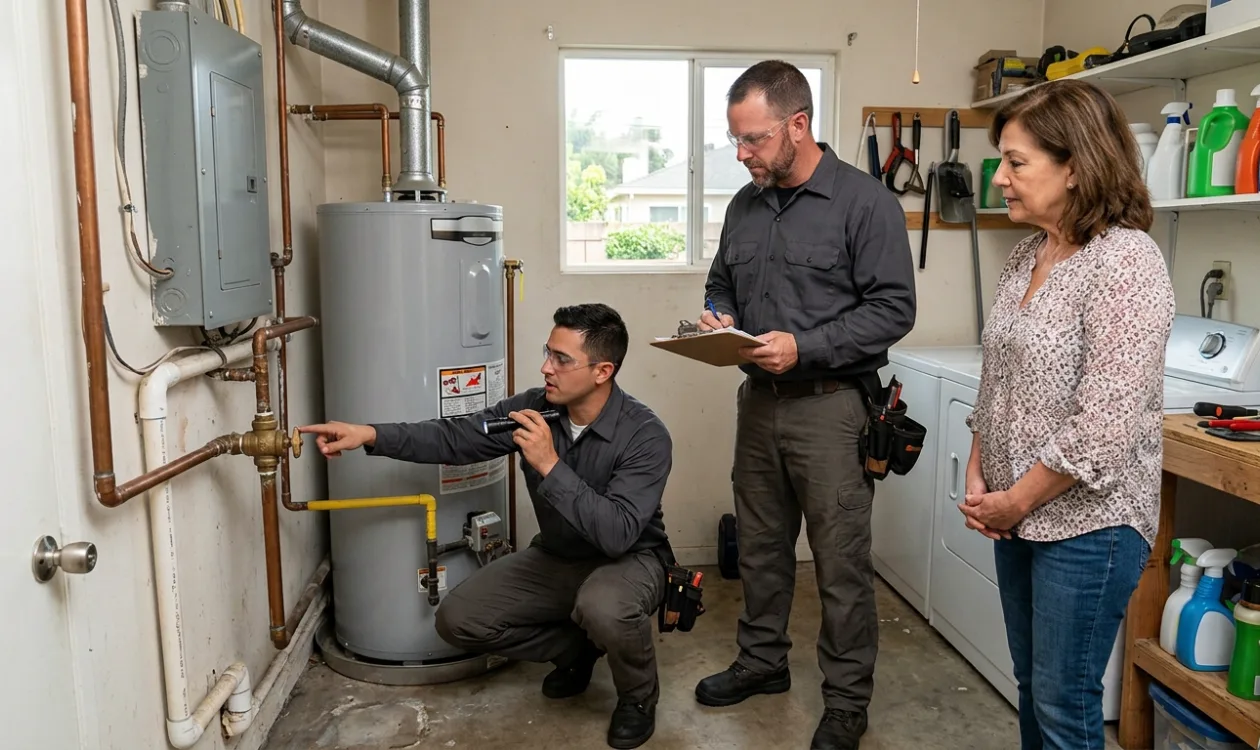
Footage plus a defect log by distance. It is your documentation for insurers, HOAs, sellers and second opinions.
Inspections run best from a ground-level cleanout. If your home does not have one, adding one is often worth doing anyway for future maintenance.
A line packed with grease or roots blocks the camera view. Sometimes the honest sequence is clear enough to see, inspect, then decide.
Book it during your inspection window, not after closing. The findings are far more useful while price is still being discussed.
Twenty minutes of footage settles arguments that quotes cannot.
How an inspection runs
An hour of work that routinely saves thousands in misdirected repairs.
Order an InspectionYou keep the recording and the notes, whoever ends up doing the repair.
An exterior cleanout is ideal. Where there is none, a roof vent or a pulled toilet gets used, and installing a cleanout is discussed.
The head is pushed the length of the lateral to the city connection, with distance tracked continuously and the footage recorded.
A transmitter in the head is traced from the surface, so each defect gets a paint mark and a depth reading above ground.
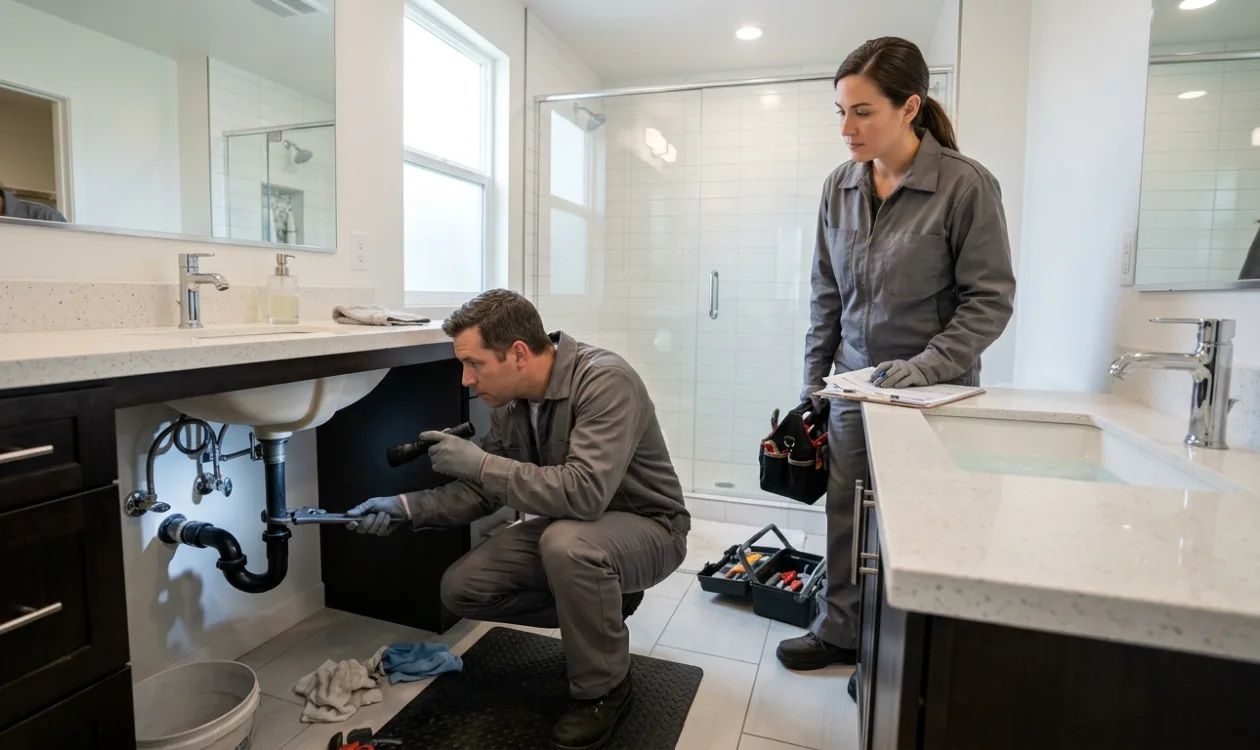
A walkthrough of what is on screen, which findings matter, and what each realistic option would involve, before any pricing.
Local ground truth
Inspections in this city come back with a predictable range of findings, and the neighborhood usually telegraphs which.
Under the older core near Historic Main Street and the Village Green, the camera typically finds clay or cast iron of considerable age. Clay shows root intrusion at the jointed connections; cast iron shows tuberculation and, where it has gone through, longitudinal cracking. Early-1900s craftsman housing there occasionally still has original drainage in service, and the footage is the difference between a spot repair and a full replacement recommendation.
Across the 1950s and 60s tracts, the recurring find is root intrusion driven by the street trees planted when the neighborhoods were built. The pattern is characteristic: fine intrusion at several joints along the run, worst nearest the largest tree. Where the pipe between joints is sound, that is a strong lining candidate. Where the roots have forced joints open and soil is entering, it is not.
In the newer condo and townhouse developments, cameras get used as much for jurisdiction as for diagnosis. Establishing whether a blockage sits in a unit's own branch or in a shared vertical stack determines who is responsible for fixing it, and footage with distances is far more persuasive to a property manager than a verbal account.
Along the dense commercial corridors, Garden Grove Boulevard through the Koreatown stretch between Beach and Brookhurst, the Little Saigon area on the south side, and the restaurant blocks near Main Street, inspections on kitchen and grease lines are usually about maintenance scheduling rather than failure. Footage establishes how quickly a line loads up, which sets a realistic jetting interval.
West Garden Grove's larger lots mean long laterals, and long laterals mean the location work matters as much as the picture. Knowing a defect is at seventy-two feet and six feet deep, rather than somewhere in the front yard, is the difference between a targeted pit and an exploratory trench.
Inspection questions
Short version: it is the cheapest step in any sewer project.
On a residential lateral, generally the whole run from the access point to the city connection. Push cameras handle a hundred feet or more comfortably. What limits a run is not distance but obstruction, a line packed with roots or grease stops the head, and a hard offset can too. Both of those are themselves findings.
No. Inspection is entirely non-destructive and works through an existing access point. If your home has no cleanout at all, access may mean pulling a toilet or working through a roof vent, and installing a proper cleanout usually gets recommended for future access.
Yes, that is what the locating transmitter is for. A defect seen at a known distance can be traced from the surface and marked with paint, along with a depth reading. That is what allows a targeted access pit rather than exploratory digging.
In this city, frequently yes. Housing built before the 1970s, laterals under mature street trees, and any property where the seller cannot say when the line was last serviced are all reasonable candidates. The cost is a small fraction of a replacement, and root intrusion or a shear break discovered before closing is a very different conversation from one discovered after.
You should, and it is worth asking before booking. A recording plus a written log of defects by distance is what makes the inspection portable, you can get competitive pricing, support an insurance claim, or hand it to an HOA without paying for the survey twice.
Then the sequence changes: clear or jet enough to get a view, then inspect. It is not wasted work, since the line had to be cleared anyway, but it does mean the visit becomes two tasks. A good dispatcher will flag that possibility when you describe a line that is currently backed up.
It is the only thing that can. Lining candidacy comes down to whether the host pipe holds its shape, whether there are severe offsets, and whether there is a belly. All three are visible on footage. Any contractor quoting lining without an inspection is guessing at those three answers.
Usually forty-five minutes to an hour and a half, including setup, the run itself, locating and marking the significant defects, and going through the footage with you. Longer laterals on larger lots and lines needing pre-cleaning take more time.
No. Camera inspection looks inside unpressurized drain lines. Leak detection finds escaping water in pressurized supply lines using acoustic and thermal methods. Symptoms tell you which you need: a spinning water meter is a supply problem, while backups and sewage odor are drain problems.
It can certainly establish the facts. Footage with distances shows whether the obstruction sits in your unit branch or in a shared stack or building main, and the locating pass shows physically where that is. It does not decide the governing-documents question, but it removes the guesswork the disagreement is usually built on.
Inspection pricing
A defined fee, quoted before the visit, independent of any repair work.
Ask What an Inspection CostsRelated work
Spot repair or full replacement, chosen from what the camera actually showed.
Read moreLining and bursting, where the survey confirms the host pipe qualifies.
Read moreWhere the finding is simply a blockage rather than a failing pipe.
Read moreWhere we do this work
The oldest drainage in Garden Grove.
Tract housing under mature street trees.
Mixed older and infill housing near the core.
Neighboring city, same era of laterals.
Garden Grove & northwest Orange County
A lateral survey costs a fraction of a replacement and changes the negotiation.
Buying a Home Here?