Slab leak repair
Detection and reroute on low ground where damp tells you little.
Read more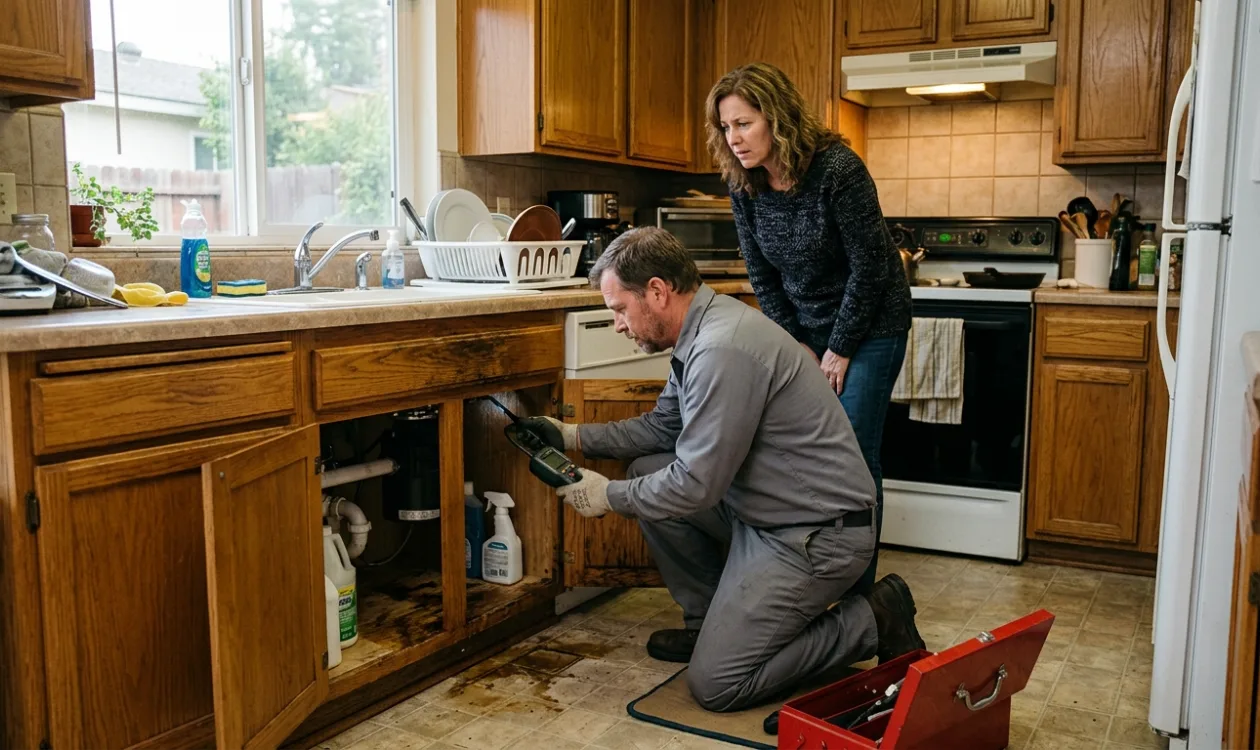
92708 · south of Garden Grove and Westminster
Fountain Valley is one of the lowest-lying cities in the county, built on ground that was farmland and floodplain before the tracts went in during the sixties and seventies. Low ground, a high water table in places, and slab construction everywhere. That combination shapes the plumbing work here.
Warm spot on the floor, a meter that keeps turning, or damp appearing with no obvious source.
Get a Fountain Valley Pro OutFountain Valley was developed largely between the mid sixties and the late seventies, on flat, low-lying land that had been agricultural. The housing is consistent: single story and two story tract homes on concrete slabs, generous lots for the region, copper supply, and sewer laterals of clay or early plastic depending on the tract and the year.
Low ground affects three things. Ground moisture is higher, which changes how leaks present and how quickly soil around a pipe stays damp. Drainage falls are shallower over distance, which makes correct pipe slope and proper venting more important than in a city with more relief. And in some tracts the water table sits close enough to the surface that excavation work needs dewatering, which affects both method and cost on a sewer replacement.
None of that makes plumbing here difficult. It means that a pro used to working elsewhere should not be surprised by wet ground in a trench, and that a quote for excavation work should account for it honestly rather than turning into a change order.
The copper-under-concrete failure pattern is the same as everywhere else in the region: abrasion, electrolysis and pinhole corrosion, arriving on a schedule set by the age of the pipe. What differs is diagnosis. In a drier city, damp soil beside a foundation is a clue. Here it is closer to a default condition, so it carries less information.
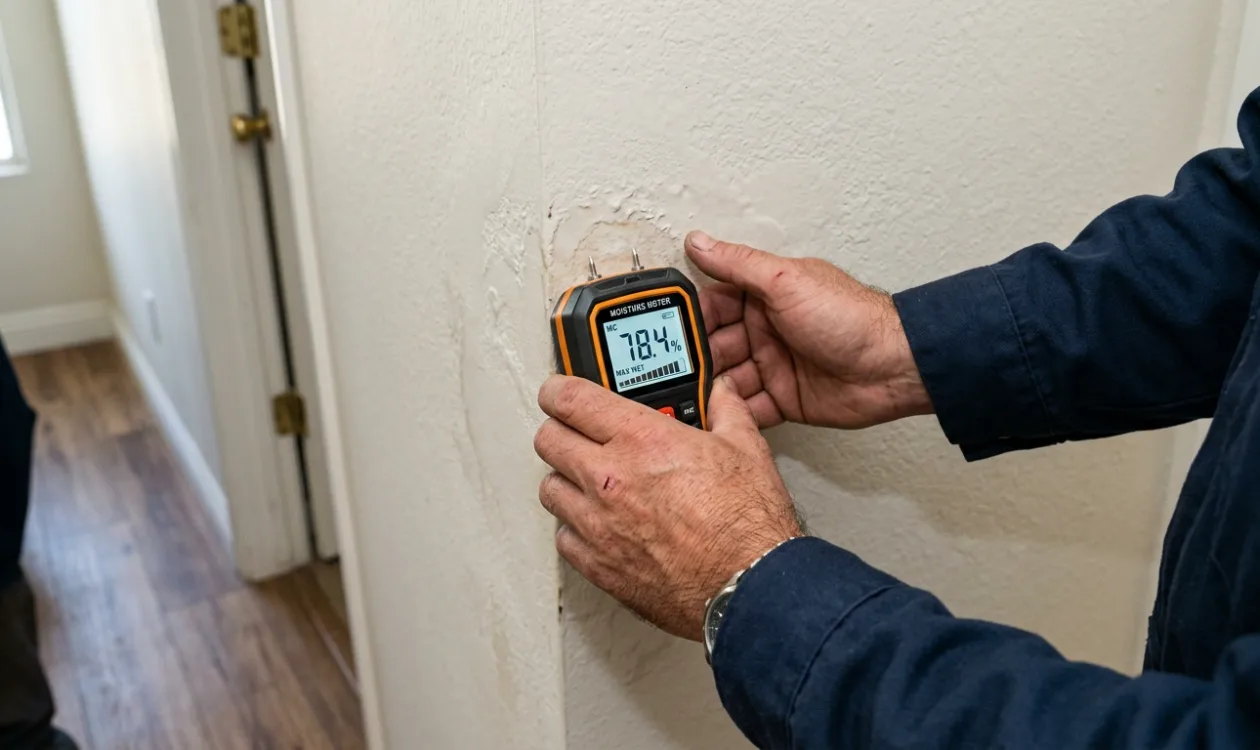
That pushes the work towards instruments. Acoustic listening equipment, thermal imaging and pressure isolation testing locate a leak precisely rather than inferring it from surface signs. It also makes the water meter test more valuable, because a moving low-flow indicator with every fixture shut is unambiguous regardless of what the soil is doing.
Tracts from this era used clay in the earlier years and early plastic later. Clay behaves as it does everywhere: roots at the joints, seasonal blockage, camera inspection as the decision point. Early plastic has its own characteristic problem, which is deformation and bellying where the surrounding soil has settled, and low-lying ground with a history of agricultural fill is exactly where that shows up.
A belly holds water and solids permanently, so the line never fully clears. Cabling and jetting both give temporary relief. The only real fix is correcting the fall, which means excavation of that section.
Fountain Valley has a good number of two-story homes, which brings the same set of considerations as Village Green: pressure differences between floors, leaks that travel before they appear, and long hot water runs to the far bathroom.
Quick facts
Ground moisture is higher here than in most neighboring cities. That makes a slab leak harder to spot by damp alone, because damp is less unusual, and it makes proper acoustic and thermal detection more valuable rather than less.
The meter test costs nothing and settles the question before anyone drives out.
Local conditions
Three practical consequences follow from Fountain Valley’s ground conditions, and they are worth understanding before agreeing to any excavation work.
Where the water table is close to the surface, a trench fills. Sewer replacement and main water line work in the affected tracts may require pumping to keep the excavation workable. It is routine, but it takes time and equipment, and it should appear in the quote rather than arriving as a surprise.
For the same reason, trenchless sewer methods are attractive here beyond the usual argument about protecting a front garden. Lining and pipe bursting avoid open excavation almost entirely, which sidesteps the water table question along with the landscaping one. Where the existing pipe is sound enough to line, it is frequently the better engineering answer as well as the cheaper one.
Soil settlement under early plastic sewer pipe produces low spots that hold water. No amount of clearing changes the geometry. If a camera shows standing water in a section of an otherwise clean pipe, that is a belly, and the honest advice is that clearing it will not hold. Correcting the fall on that section is the fix.
Given the cost and disruption of opening a slab in ground that may be wet, rerouting a failed supply line overhead through the attic is frequently the more sensible response to a slab leak here. It avoids concrete entirely, it is verifiable, and it retires the section of pipe that failed rather than patching it.
Standard for the era and the region: garage installs, strapping, pan and drain, and thermal expansion control. Where a pressure regulator has been fitted the system becomes closed, and without an expansion tank the pressure spike each heating cycle shortens the life of everything on the hot side. It is a small part that prevents a large problem.
Most requested here
Detection and reroute on low ground where damp tells you little.
Read moreAcoustic and thermal location rather than inference.
Read moreFinding bellies and root intrusion in seventies laterals.
Read moreAvoiding excavation where the water table is close.
Read moreOverhead reroutes that retire slab pipe for good.
Read moreGarage replacements with expansion control done right.
Read moreHow a call works
Locate precisely, then choose the method that suits the ground rather than the textbook.
Ask About Trenchless Options Here
If you have taken a meter reading, mention it. It confirms a leak before anyone arrives.
A moving low-flow indicator with everything shut confirms a supply leak regardless of what the soil looks like.
Acoustic and thermal equipment narrow the position before any concrete or ground is opened.
Reroute, spot repair, lining or excavation, with the water table and access taken into account.
Pressure tested or camera verified, with permits handled where the City of Fountain Valley requires them.
Local questions
Slab leaks, wet ground, bellied sewer lines and what excavation really involves here.
Not the plumbing inside the house directly. It affects excavation work, because a trench can fill and need pumping, and it affects diagnosis, because damp ground is less informative than it would be elsewhere.
It is a reason to use proper detection equipment rather than surface signs.
Frequently, yes. Rerouting the affected line overhead avoids opening concrete and avoids any question about ground conditions beneath it.
It also retires the failed pipe rather than patching it, which matters if the rest of the system is the same age.
If a camera shows standing water in a clean section of pipe, that is a belly caused by soil settlement, and clearing cannot fix geometry.
The section holding water needs its fall corrected, which means excavating that part specifically rather than the whole run.
It can, where dewatering is needed to keep the excavation workable. That should be identified and priced up front rather than added later.
It is also a strong argument for assessing trenchless methods first, since they largely avoid the issue.
Most date from the sixties and seventies build-out. Earlier tracts tend to be clay; later ones use early plastic.
Clay fails at the joints through root intrusion; early plastic tends to deform and belly. The camera tells you which you have.
If the house has a pressure regulator, the system is closed and thermal expansion has nowhere to go. An expansion tank absorbs that, and without one the pressure spikes on every heating cycle.
It is a small component that noticeably extends the life of the heater and the fixtures.
Somewhat. Pressure differs between floors, leaks travel through the structure before they appear, and hot water takes longer to reach the furthest bathroom.
None of it is difficult, but it changes how a leak is traced.
The City of Fountain Valley. Water heater replacement, repipes, sewer replacement and gas work generally require a permit and inspection.
That is handled as part of the job by whoever is doing the work.
Next door
Immediately north-west.
To the north-east.
North across two boundaries.
A short distance north-west.
92708 · low ground, precise work
Instruments locate the leak, the method suits the conditions, and the price is agreed before anything is opened.