Drain cleaning
When the blockage is in the branch line rather than the unit.
Read more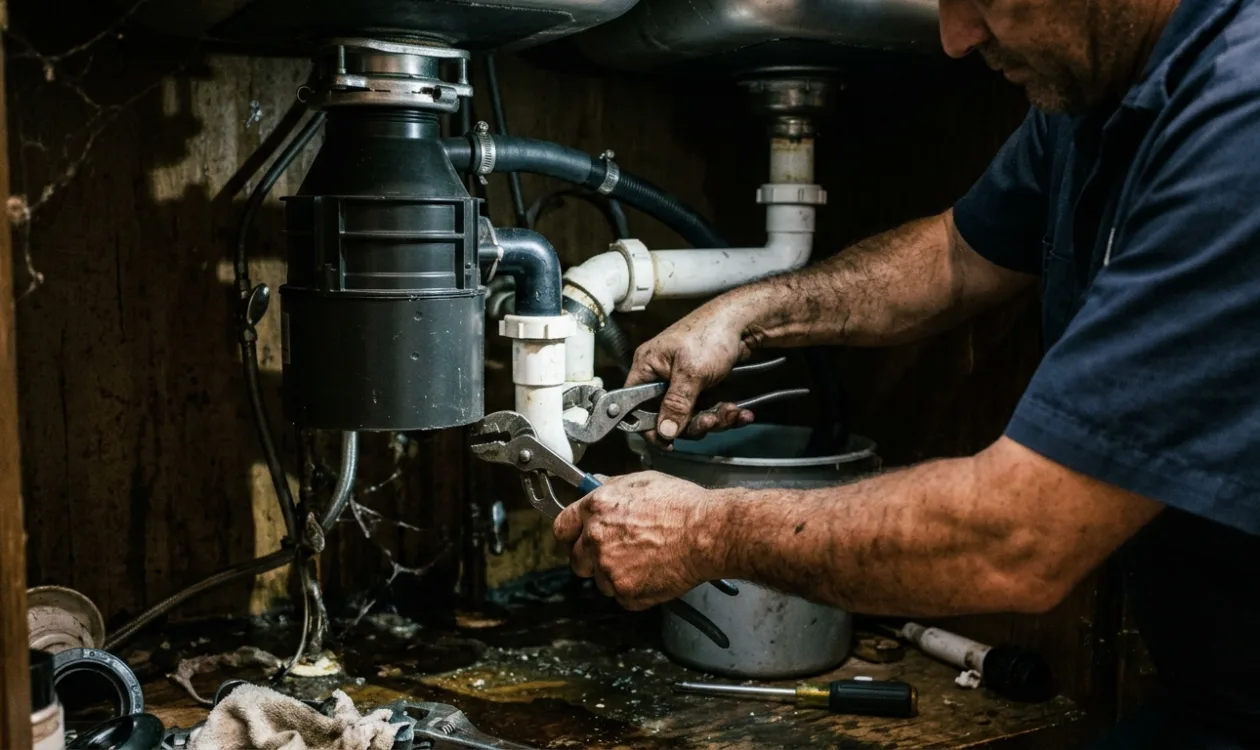
Disposals · jams, leaks, replacements
A disposal that hums without turning, leaks from the bottom, or backs the sink up is three different problems with three different answers. We connect you with a local plumber who tells you which one you have, and whether it is worth repairing at all.
Does it hum, click, or do nothing at all? That one detail narrows it immediately.
Call (657) 354-1942 About the DisposalDisposals fail in a small number of predictable ways, and each one has a signature sound. Learning to describe it accurately on the phone saves everybody time.
A hum with no rotation means power is reaching the motor but the plate cannot turn. Something is wedged, a fruit pit, a bottle cap, a piece of cutlery, or a build-up of fibrous material bound around the impellers. This is the most common call and often the cheapest fix. A hex wrench in the bottom port frees the plate, the obstruction comes out, the overload reset gets pressed, and it runs. What matters is that nobody leaves the switch on while it hums, because that is how a motor burns out.
Silence with no hum means power is not arriving or the motor has failed. That is a check of the switch, the outlet, the breaker and the reset button, in that order. If all four are good and it is still silent, the motor is done.
Metallic grinding that continues after the sink is empty means something hard is loose in the chamber, or the impellers themselves have broken. Loose object is easy. Broken impellers are not repairable in any economic sense.
Water under the cabinet is the one that needs the most careful look, because a disposal leaks from three distinct places and only two of them are worth repairing.
A leak at the top, where the unit meets the sink, is the sink flange and the mounting gasket. That is a reseal, drop the unit, clean the flange, new plumber's putty or gasket, remount. Perfectly worth doing on a healthy unit.
A leak at the side is the drain elbow or the dishwasher inlet connection. Gaskets and a bolt or clamp. Also worth doing.
A leak from the bottom of the unit is different. That is the internal seal above the motor, and once water is getting past it, the motor bearings are already taking water. There is no serviceable seal on a residential disposal. A bottom leak means replacement, and any pro who tells you otherwise is selling you a repair that will fail.
Plenty of “the disposal is broken” calls turn out to be a drain problem. The unit runs perfectly and the water still will not go anywhere, because the blockage is downstream in the branch line. In a kitchen that is almost always grease combined with ground food solids, coating the inside of the pipe until the opening narrows to nothing. The disposal did not cause it, but years of disposal use contributed to it.
The diagnostic is simple: run the disposal with the water on and watch where the water stands. If it backs up into the second basin, the blockage is past the tee. If the unit itself is full and stationary, the problem is at the unit. Those two answers send the visit in completely different directions, one to the unit, one to a cable machine or a jetter.
Honest arithmetic: a jam, a flange reseal, a drain elbow gasket or a tripped overload are all cheap repairs and always worth doing. A failed motor, broken impellers, or a bottom-seal leak on a unit older than about eight years is a replacement. A cheap builder-grade half-horsepower unit that is five years old and already failing is also usually a replacement, because the next failure is not far behind.
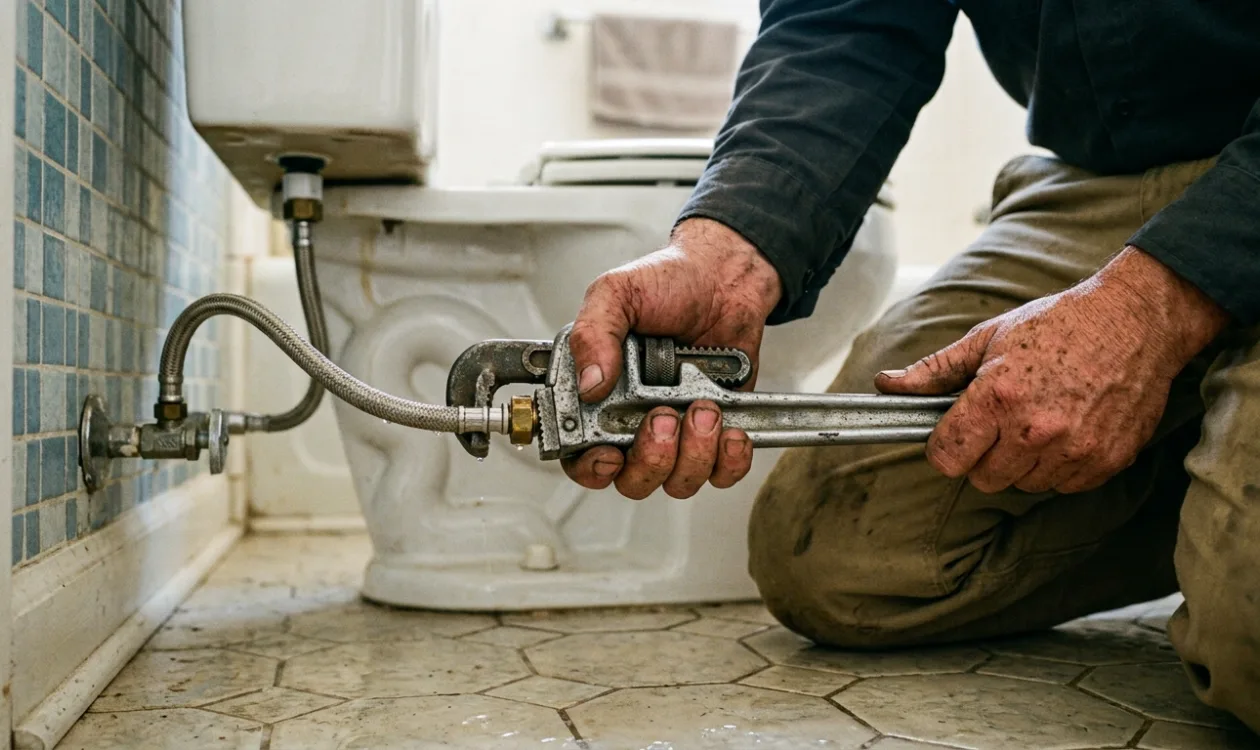
Switch it off at the wall, then press the red reset button on the underside of the unit. A surprising number of dead disposals come back with that alone.
Do not put a hand in the chamber, and do not hold the switch on while it hums. One risks injury, the other kills the motor.
Cold water and a running flow while grinding, and keep fibrous scraps, rice, coffee grounds and grease out. Those four are what most kitchen line blockages are made of.
A jam is a ten-minute fix. A leaking housing is a replacement. They sound similar from the doorway.
How the visit goes
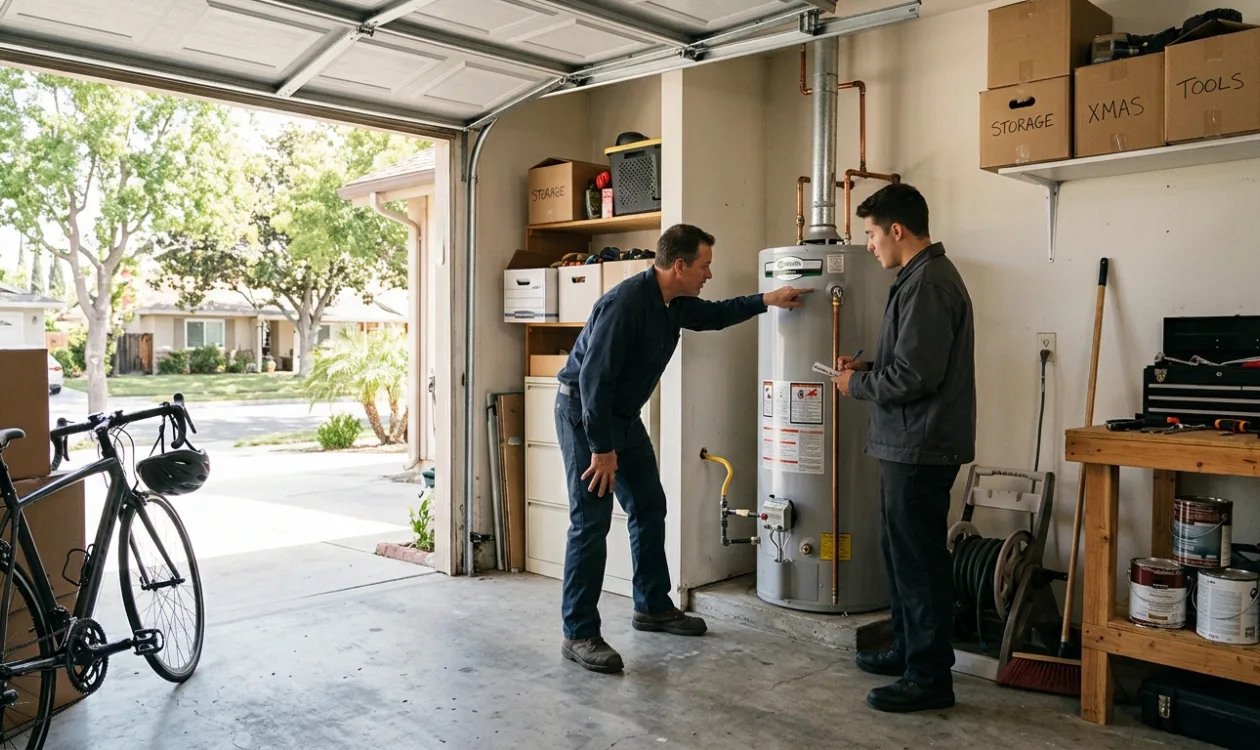
The point of the visit is to find out whether you need a ten-minute repair or a new unit, and to tell you which before spending your money.
Tell Us the Noise It MakesHumming, grinding metal, or silence. Each one points at a different part.
Switch, outlet, breaker and the overload reset get tested before anything is dismantled.
The plate is freed if jammed, the chamber cleared, and all three leak points examined for where water is actually coming from.
The line downstream is run to confirm whether the problem is the unit or the pipe past it.
You get one clear recommendation, one number, and the old unit hauled away if it is being replaced.
Local specifics
Two local factors put more load on disposals here than the average American kitchen. The first is cooking style. Across the Little Saigon corridor, the Koreatown blocks along Garden Grove Boulevard, and the many multi-generational households throughout the city, kitchens run all day and produce a lot of fibrous vegetable waste, lemongrass, greens, cabbage, herb stems. Fibrous material does not grind so much as wrap, and it binds around the impellers and packs into the drain elbow. It is the single most common cause of the jams we get called about.
Rice is the second. Ground rice does not disappear; it passes into the line and swells, and combined with cooking grease it builds a paste that narrows a two-inch kitchen branch surprisingly fast. Households that scrape rice into the disposal routinely tend to be the households calling about a slow kitchen sink eighteen months later.
The second factor is water hardness. Orange County supply leaves mineral deposits inside the grinding chamber and on the drain elbow, and that scale gives grease something to hold onto. It is why kitchen lines in this area coat up faster than the same pipe would in a soft-water city.
In houses built before the mid-sixties (a lot of the stock near Historic Main Street and the older tracts), the kitchen branch may be galvanized steel, and it may be smaller than what a modern disposal really wants. A high-horsepower unit pushing solids into a corroded one-and-a-half-inch galvanized branch is a blockage on a schedule. In those kitchens the smarter recommendation is sometimes a smaller unit and a conversation about the branch line, not the biggest disposal on the shelf.
Most disposals here take the dishwasher drain. Two things go wrong. First, the inlet plug on a new unit has to be knocked out before the dishwasher line is attached, forget it and the dishwasher will not drain at all. Second, that hose needs a high loop or an air gap so dirty disposal water cannot siphon back into the dishwasher. A missing high loop is one of the most common installation faults found in this city, and it is a two-minute correction during any disposal visit.
Garden Grove has approved a lot of accessory dwelling units, and their kitchenettes often tie into drain lines that were never designed for a second kitchen. If a new ADU sink backs up under disposal use, the issue is usually slope or venting in the added plumbing rather than the unit. That gets checked before anyone replaces a perfectly good disposal.
Disposal questions
Straight answers on jams, leaks, and whether a repair is worth it.
It is jammed. Power is reaching the motor but the plate cannot rotate, usually because something hard or fibrous is wedged against the impellers.
Turn it off at the wall. Do not keep holding the switch: that is how the motor burns out. Freeing the plate and clearing the obstruction is normally a quick, inexpensive repair.
Not necessarily. Check the red reset button on the underside of the unit first, then the wall switch and the breaker. Overload trips are extremely common and cost nothing to fix.
If power is confirmed and it is still silent, then the motor has failed and the unit needs replacing.
That depends on where. Leaks at the top flange or the side drain connections are gaskets and seals, and both are worth repairing on a sound unit.
A leak from the bottom of the housing is the internal motor seal. There is no serviceable fix for that, and it means replacement.
Eight to twelve years is typical for a mid-range unit in normal use. Heavy daily use with fibrous waste shortens that considerably, and builder-grade half-horsepower units often fall short of it.
When a unit past eight years needs a motor or has a bottom leak, replacing costs less than chasing it.
Grease and oil, coffee grounds, rice and pasta, eggshells in quantity, fruit pits, bones, and fibrous vegetables and herb stems. Those are what most jams and most kitchen line blockages are made of.
Cold water running throughout the grind, and a few seconds of flow after it, does more for a disposal than any cleaning product.
Because the blockage is downstream in the kitchen branch line, not in the unit. Years of ground food and grease coat the inside of the pipe until the opening narrows.
That is a cabling or jetting job rather than a disposal repair. The plumber tests the flow to confirm which it is before quoting.
It is a poor idea. Caustic cleaners sit in the chamber against metal components, and if the line is fully blocked the chemical simply pools where somebody will later have to put their hands.
Mechanical clearing is faster, more thorough and does not leave chemistry in the pipe.
For most households here, three-quarter horsepower is the sensible middle. Half-horsepower units struggle with fibrous waste; one-horsepower units are worth it for very heavy use.
One caveat: in an older home with a corroded galvanized kitchen branch, a more powerful unit pushes more solids into a pipe that cannot take them. The plumber will say if that applies to your kitchen.
Almost always because the inlet plug inside the new disposal was not knocked out before the dishwasher hose was connected. It is a factory plug and it has to be removed.
The other cause is a missing high loop in the dishwasher drain hose, which also lets dirty water siphon back. Both are quick corrections.
A jam clear or a reset is the low end. A flange reseal or drain elbow repair is modest. A full replacement covers the unit, mounting hardware, connections and haul-away.
You are told which category you are in, with a number, before work begins. Call (657) 354-1942 and describe the noise.
Pricing
Unit, mounting assembly, drain connections and the old one taken away, quoted as one number.
Ask Repair or ReplaceRelated work
When the blockage is in the branch line rather than the unit.
Read moreKitchen faucets, angle stops and filtered taps.
Read moreGrease-coated kitchen lines that cabling alone will not clear.
Read moreWhere we do this work
Kitchens that run all day, every day.
Fibrous vegetable waste and frequent jams.
Mixed housing with mixed drain sizes.
Neighboring city, same-day disposal work.
Garden Grove & northwest Orange County
A blocked kitchen sink stops dinner. Most disposal calls are handled the same day.
Get the Sink Working Again